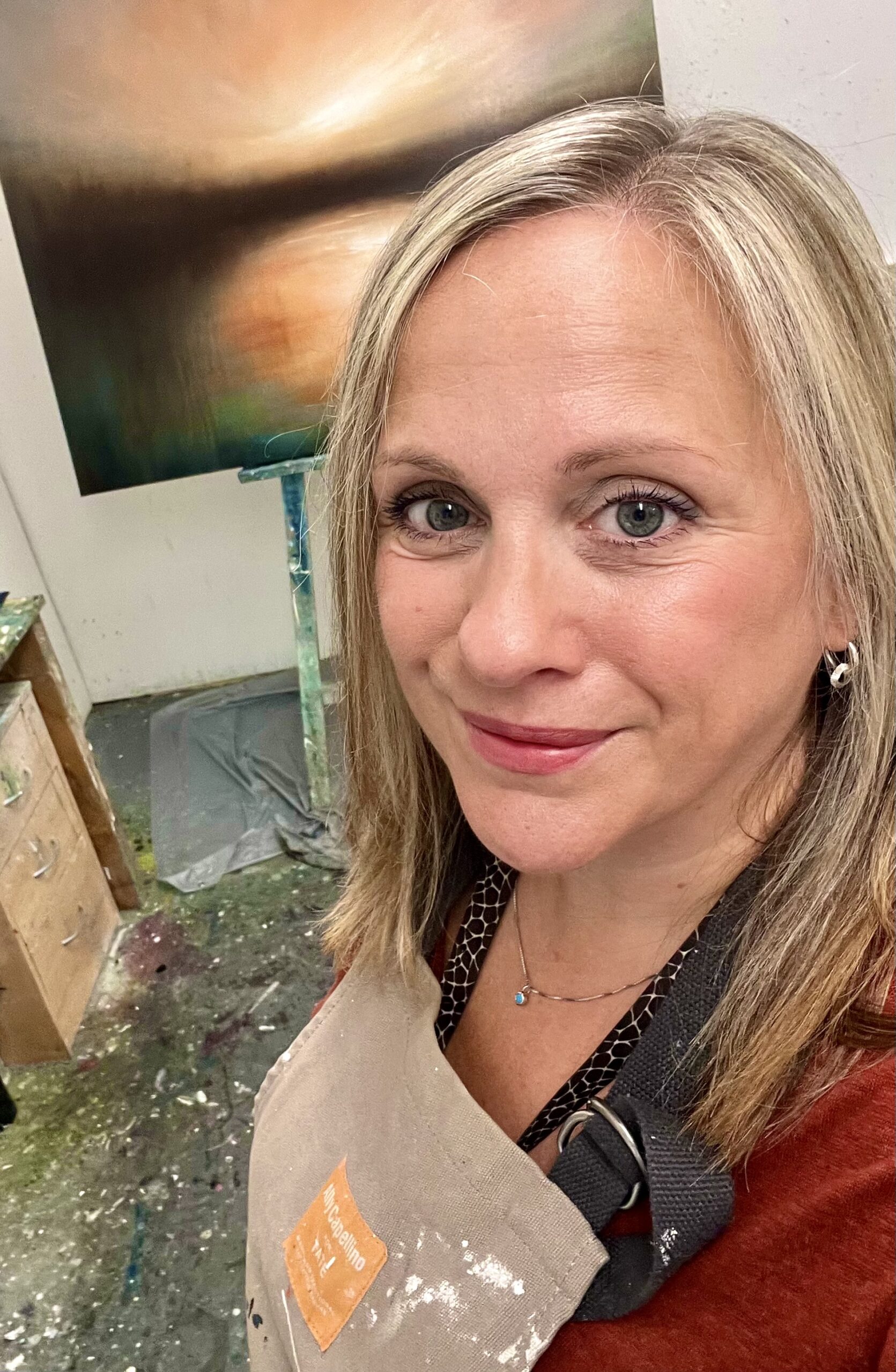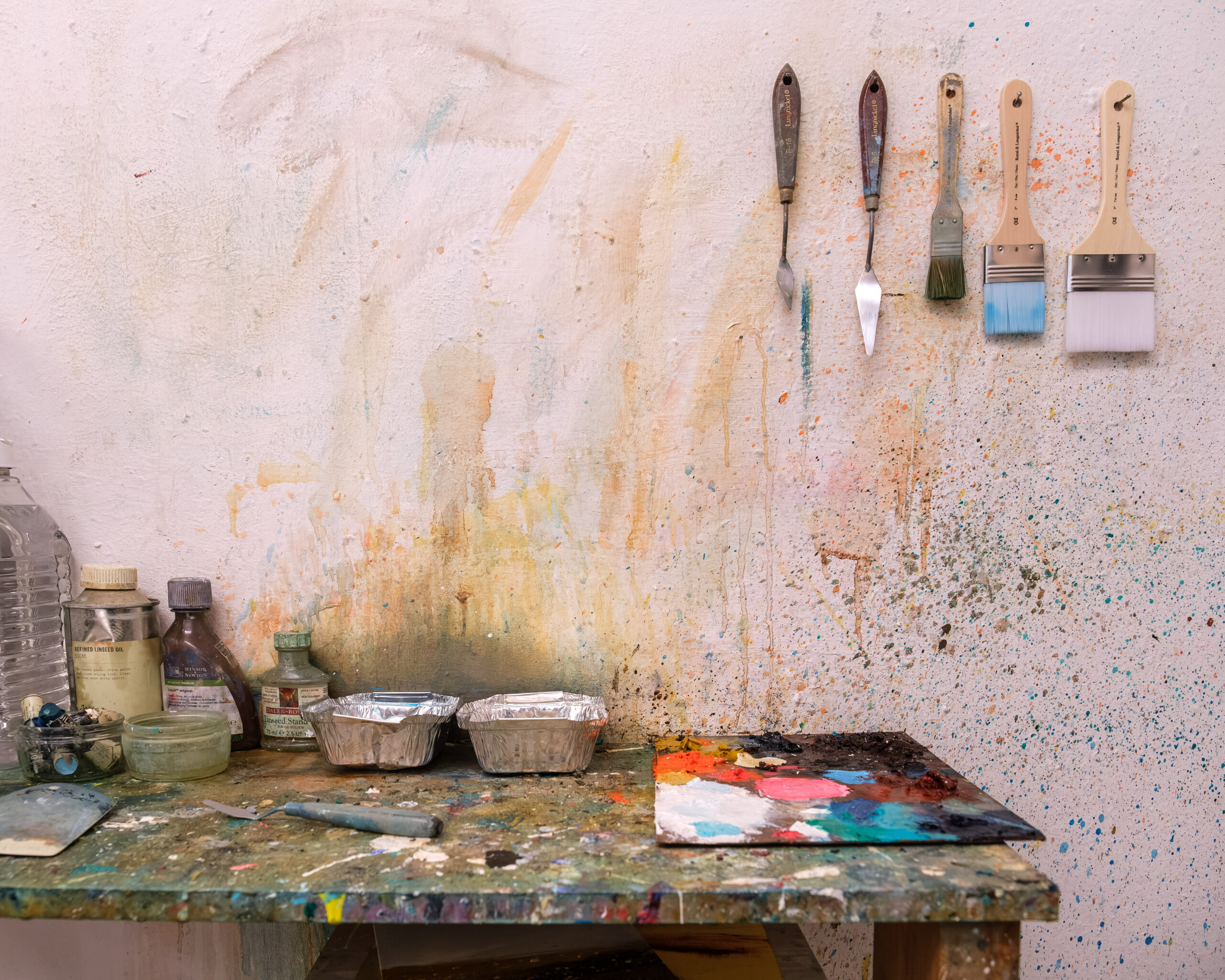
Painter and life drawing tutor Tessa Houghton on gesture drawing, memory, and building a career.
Tessa describes her work as two distinct, overlapping practices.
‘I’ve got my painting practice, which is very landscape-based, quite abstract and intuitive. And then I’ve got my drawing practice, which is observational and feels quite different. They do feel a little disparate, but I think they feed into each other. The drawing definitely helps with my painting practice.’
That drawing practice traces back to her foundation year, learning to draw more than thirty years ago. She believes that anybody can be taught how to draw. Some are naturals, and some have to work at it, but you can learn fundamental techniques to develop your own style.
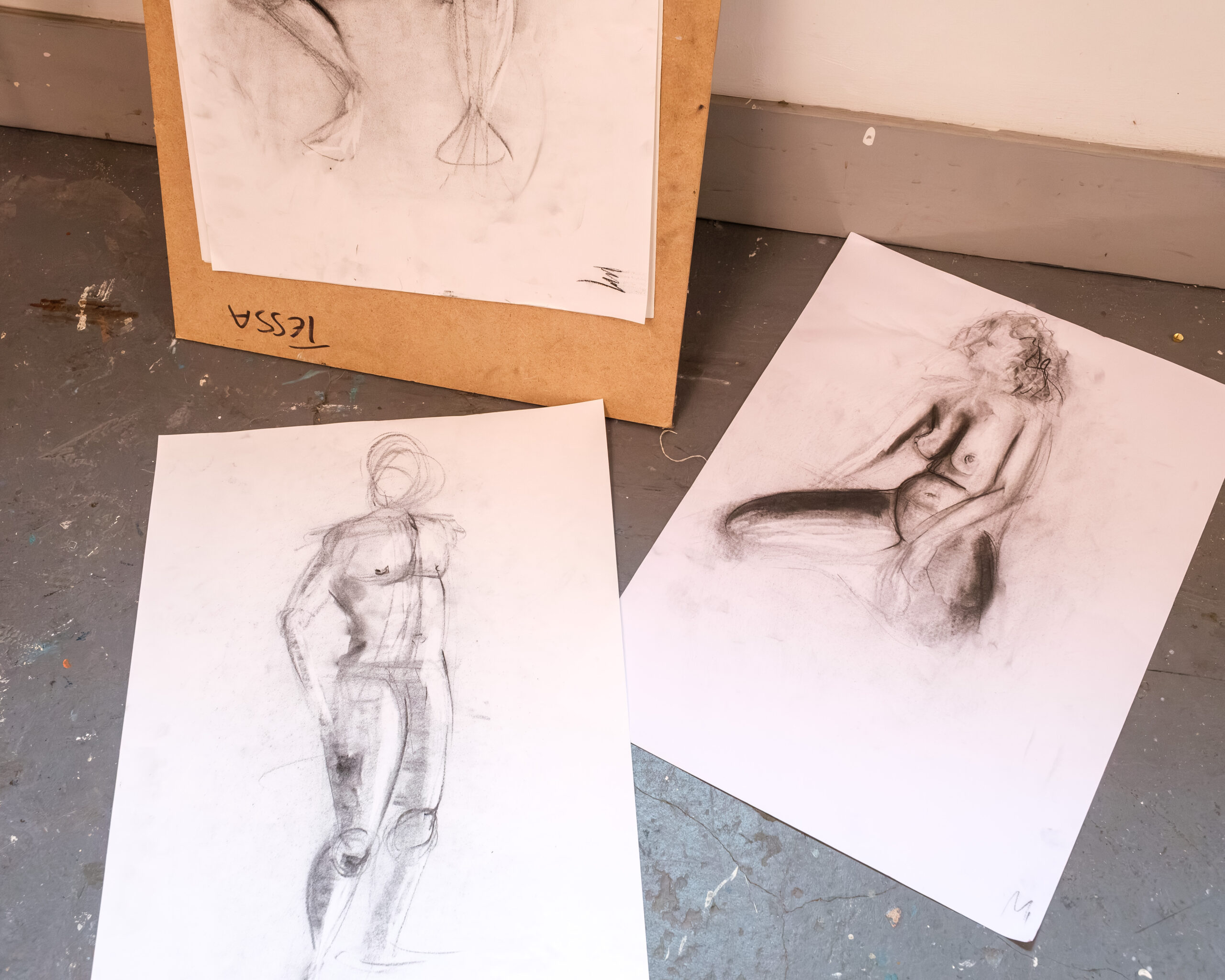
Gesture drawing, working quickly and loosely, sits closest to her painting. ‘It’s about working really quickly and capturing the essence of the pose. It’s not so focused on precise perspective and measurement; it’s about energy, capturing movement and expressive mark-making.’ It’s also the first thing she teaches beginners: a single line of action, capturing the core shape of a pose in one mark, before anything more measured.
‘Life drawing, it’s more about looking. It’s as much about looking as it is drawing. It’s teaching people how to see.’
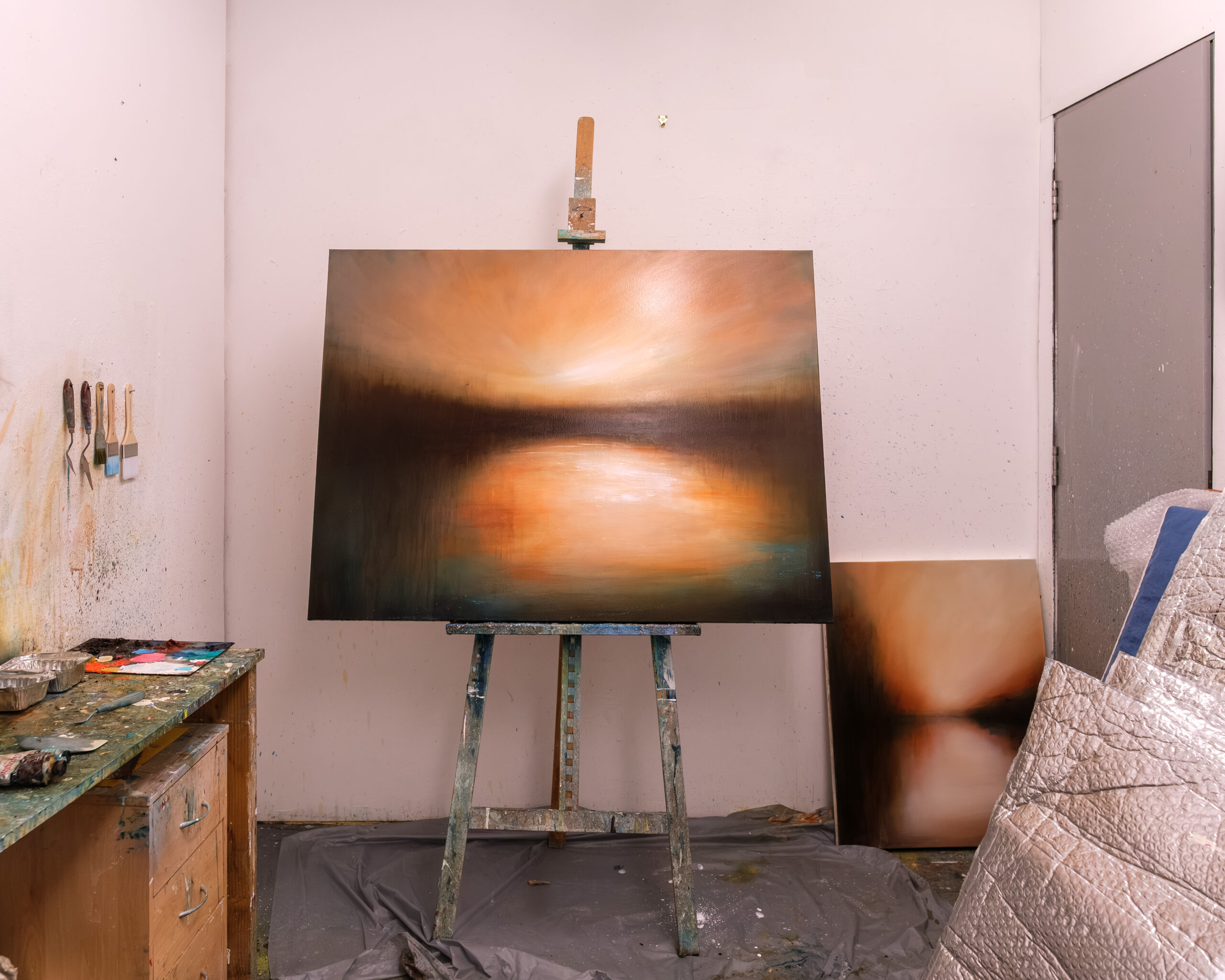
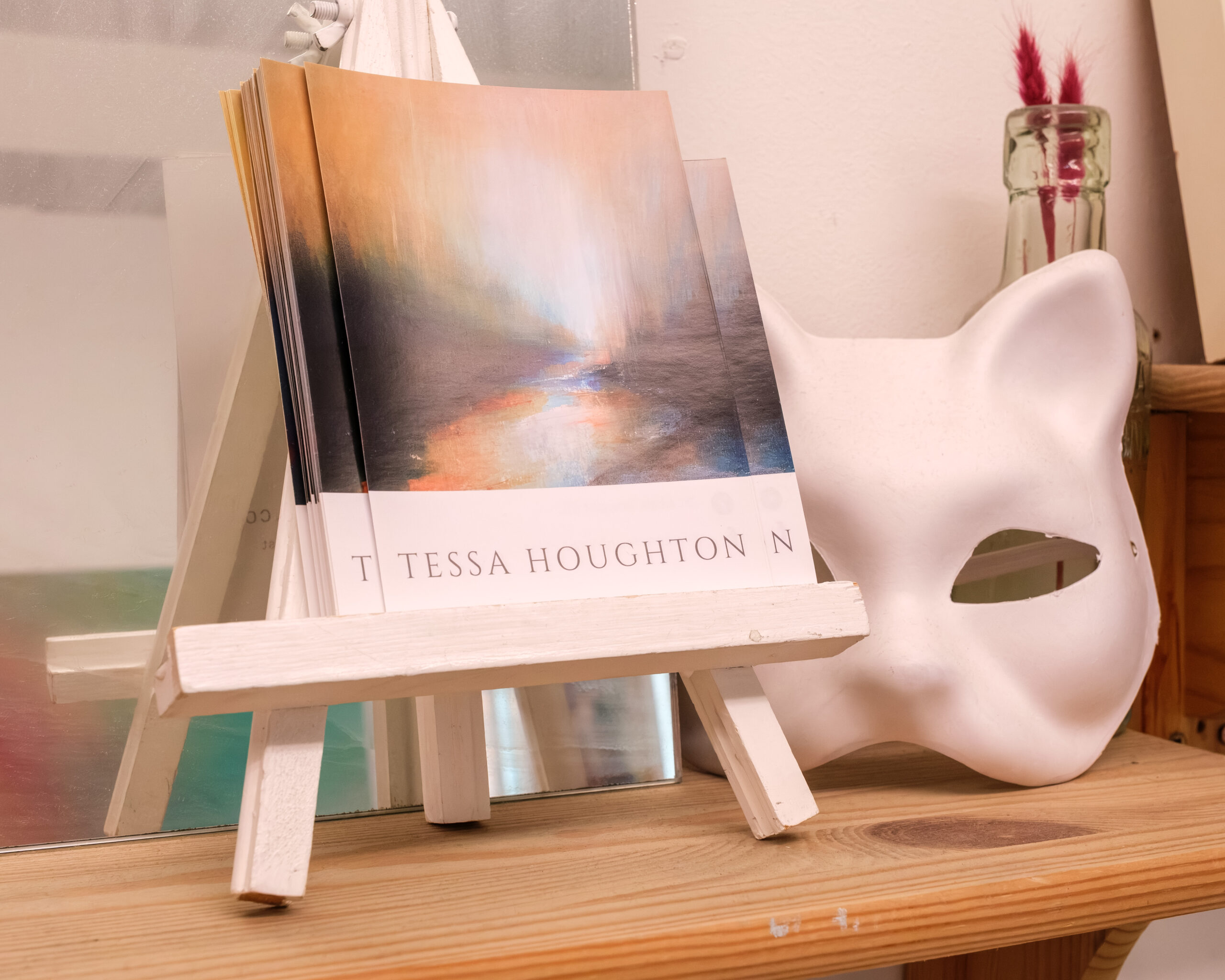
Tessa doesn’t paint outdoors. Her landscapes begin as time spent in the landscape, documenting with photographs, carried back to the studio. What follows has less to do with recording a place than conjuring a feeling.
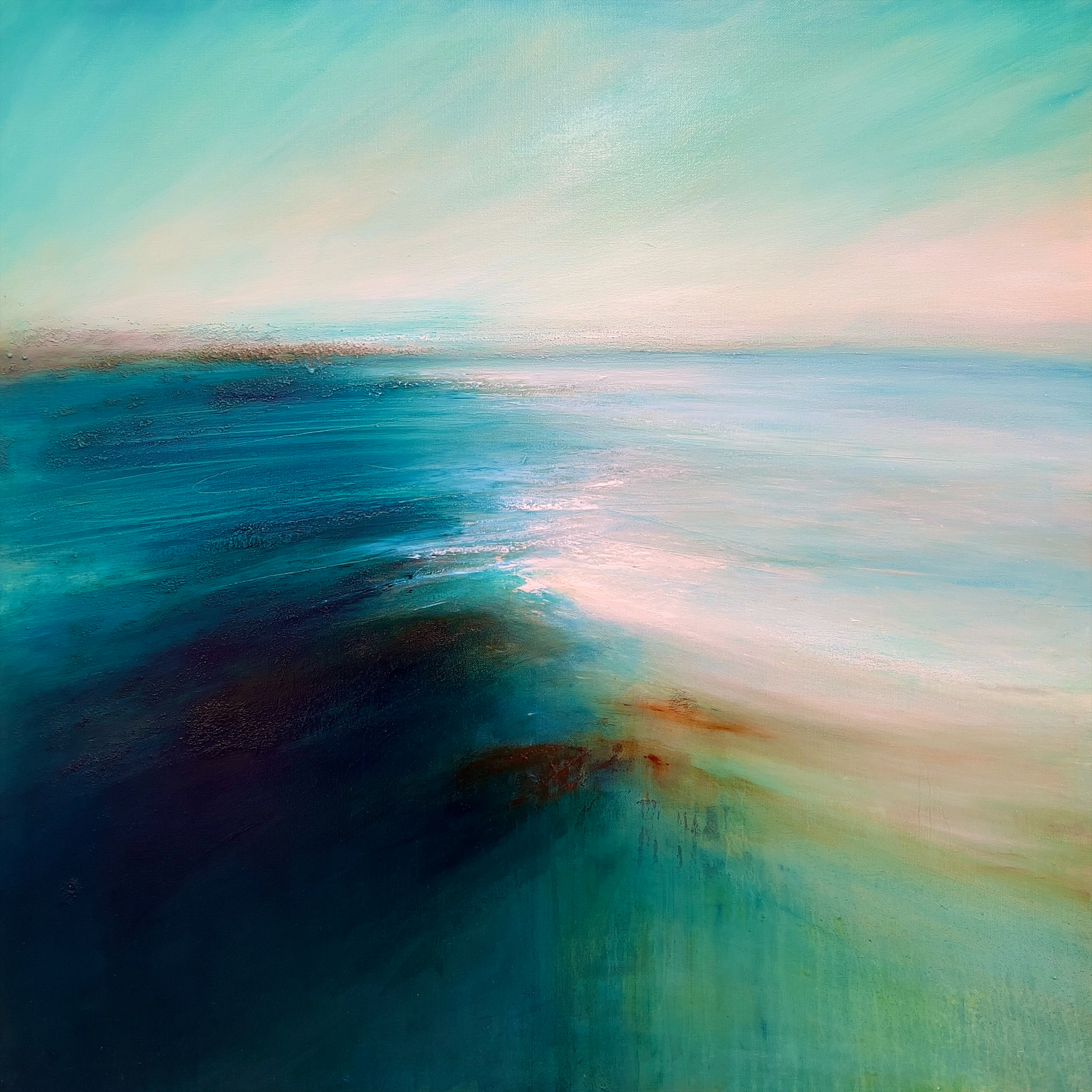
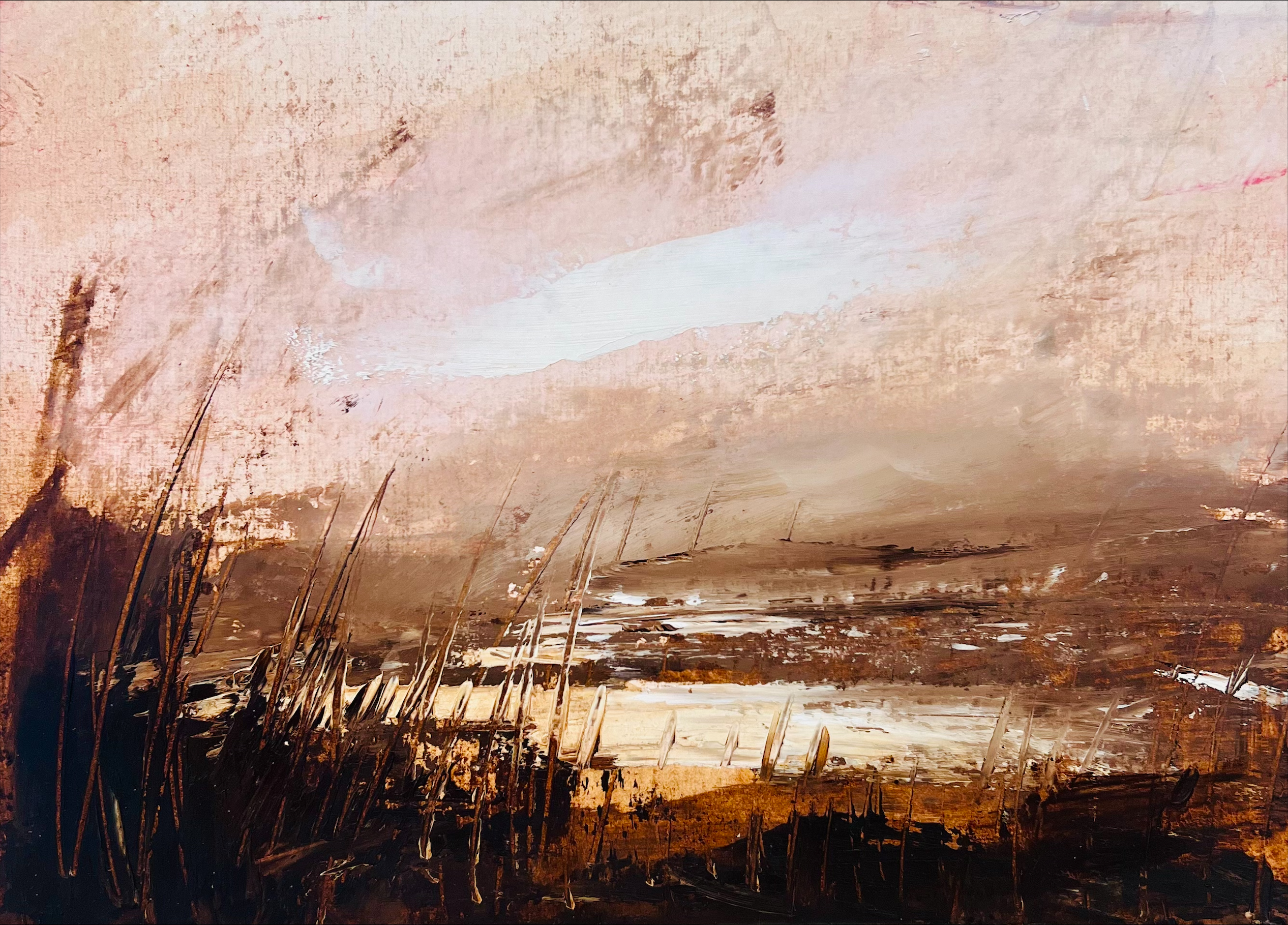
‘They’re more about creating a mood and an atmosphere than about representing places. Quite often, it’s like light reflecting on water, where land and sky meet, or water and sky, liminal spaces.’
One place recurs several times: Rivington Pike, above the Lancashire village where she grew up, where the industrialist Lord Leverhulme built a folly a century ago, complete with a Japanese lake, Chinese gardens, and, at one point, tigers and lions. ‘There’s a place that always crops up in my paintings. I used to go there with my family. Both my parents have passed away now, and it’s somewhere we used to go together. It’s got an emotional connection. The Japanese lake is one of the most beautiful and atmospheric places, especially in winter.’ These days she visits at Christmas with her brother and family.
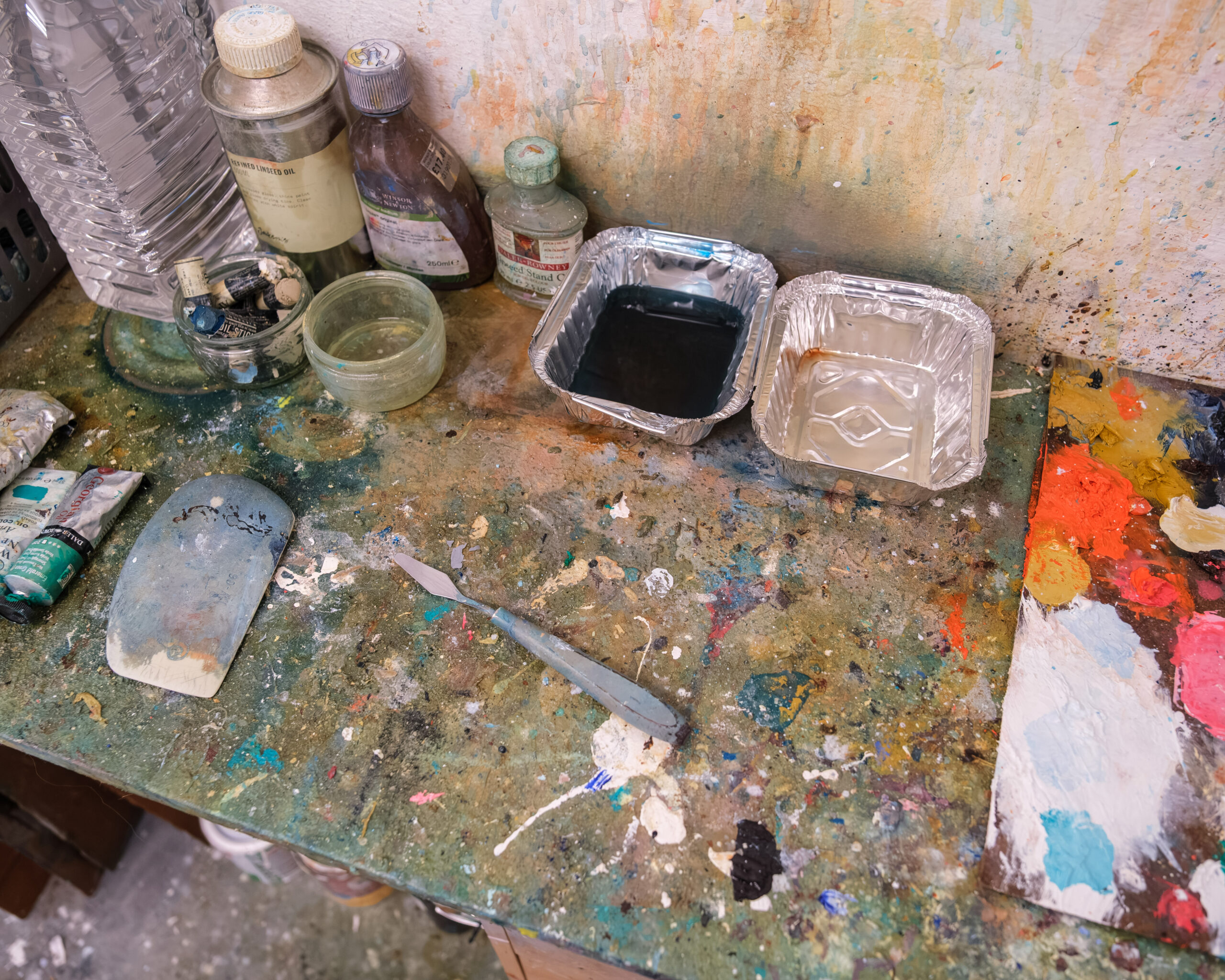
Her palette stays deliberately narrow: burnt sienna, burnt umber, yellow ochre, ‘classic earthy colours,’ alongside a phthalo turquoise she can’t seem to leave out. ‘I just love that colour, and it finds its way into all my paintings.’ Twelve years living by the sea in Barcelona left its mark too. Contrast does most of the work: light against dark, warm against cool, smooth passages against heavily textured ones. ‘You can do a lot with a limited palette, and you can mix. It’s the light and dark that’s the key thing.’
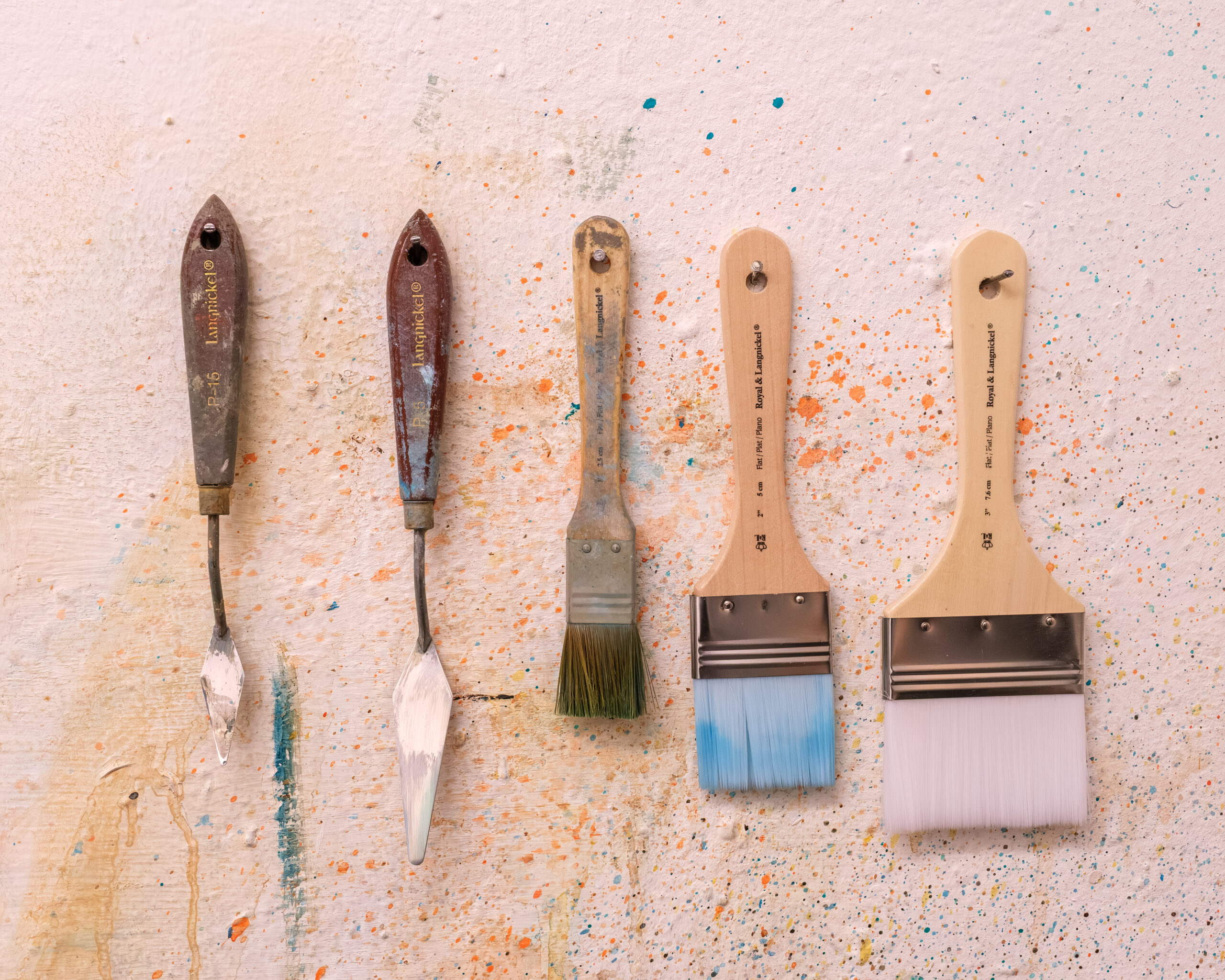
A single painting can take weeks, sometimes months, built in layers of oil paint that have to dry fully before the next glaze goes on. Marble dust and cold wax medium go in early, ‘because I want that to dry before I paint over it.’ Tessa keeps four or five canvases going at once, partly out of necessity. ‘I do an hour on one, and then I turn it around and work on another.’
‘I really like the physicality of the paint, the drips, the accidental marks. Nothing’s fully planned. I embrace the accidental marks, and then sometimes I keep them, sometimes I layer over them.’
Knowing when to stop is its own skill, one she’s learned to manage by walking away. ‘The beginning is always easiest because you’re completely free, making marks. But then you get to a point where it’s almost coming together, and you’re scared to touch it in case you lose what you’ve already done. Usually, I turn it around and leave it for a while. I come back to it with fresh eyes, and then I can usually see what needs doing. Or sometimes, nothing; I think it’s finished.’ Timescales vary wildly: one painting sat turned to the wall in her studio for nearly ten years before she finished it and sold it within days.
Tessa moved to Barcelona almost straight after university. ‘My work at uni, I don’t really relate to it now. I felt really pressurised; it was a time when conceptual art was pushed, and painting was thought of as a bit old-fashioned.’
The way she’d been taught to work, building sketchbooks, researching, and arriving at a piece through a documented process, gave way to something more immediate.
“Now it’s the opposite. I make the work very instinctively and quickly, then I look back on it over time and think, oh, that’s why I did that. It makes sense after I’ve made it.”
That instinct led somewhere unexpected a couple of years after her mother died, when Tessa found herself making an entirely new, botanical body of work rooted in the family home she’d grown up in, on the edge of a canal. “I didn’t set out to make a body of work about that place. It just organically happened.”
In Barcelona, teaching English to fund her practice, she found focus through Gracia Arts Project, a rented gallery space shared between a group of artists. Through this, she would have one or two exhibitions a year. This gave her focus; constantly making work alongside teaching. But breaking into other Catalan galleries proved difficult: ‘They go off your CV, where you’ve exhibited before. It’s quite hard if you are starting out and haven’t got that credibility yet.’
When her twelve years in Spain came to an end, alongside the end of a relationship and her mother’s death, Tessa spent six months back with her father, and treated her art practice as the one thing she could take control of.
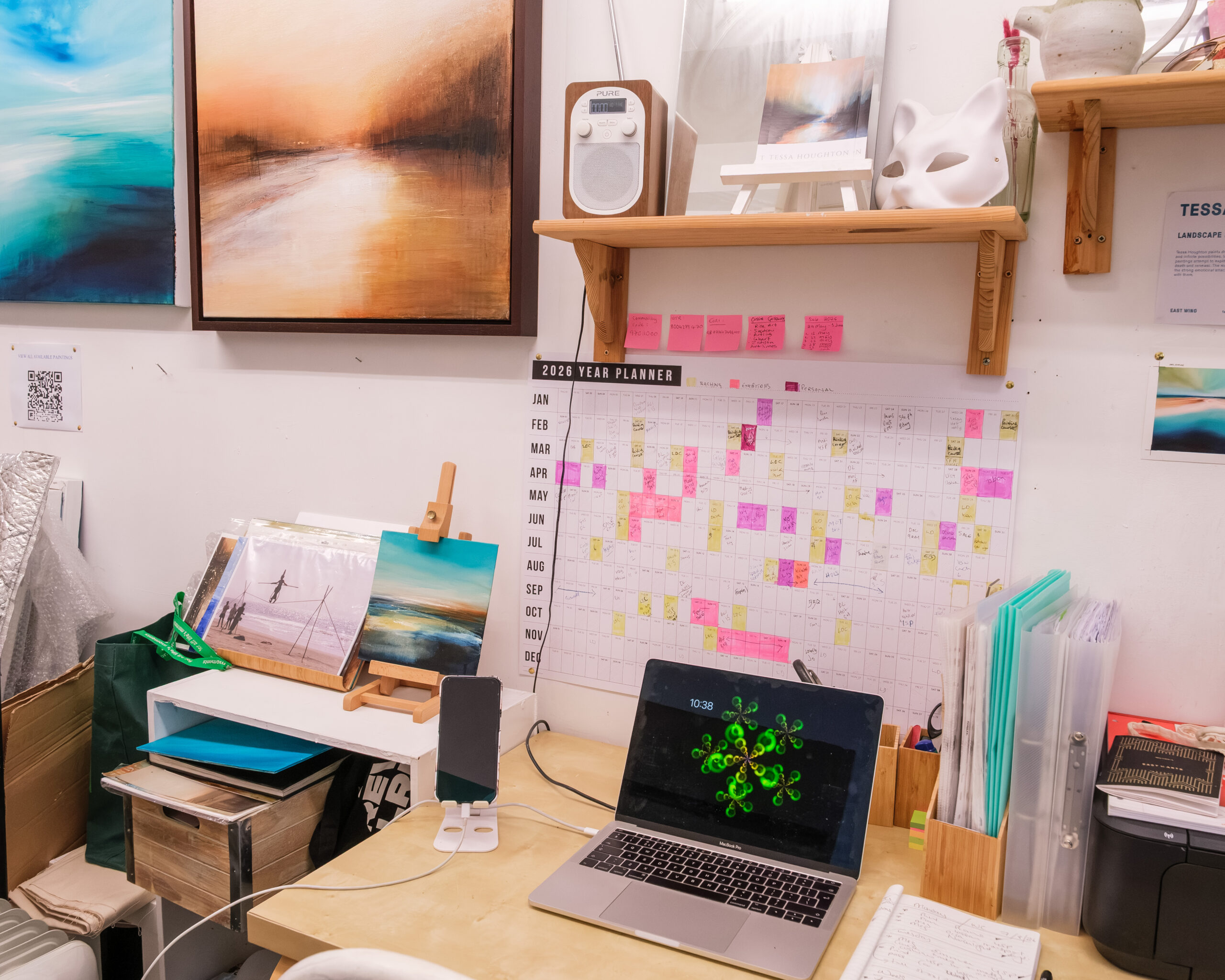
‘The only thing I felt like I had control over was my art career. So I got an accountant, I got a publisher, I did all the business things I needed to get things in place.’
It’s a line she still comes back to when talking to younger artists: ‘You have to think of it as a business, otherwise you’re doing it in your spare time. You can’t dedicate as much time to it.’
Tessa is wary of arrangements that trade creative control for guaranteed income, and turned down a contract early in her career that would have required her to paint eight pieces a month for a print publisher. “It would have felt like just churning out the same thing.”
She now works with two or three galleries she has long-standing relationships with. Tessa also shows regularly at the Affordable Art Fair, now in its twenty-fifth year, set up by William Ramsay, who also owns the London Art Fair. It’s grown into an international event, with fairs in Singapore, Hong Kong, New York and beyond, though only galleries, not individual artists, can exhibit.
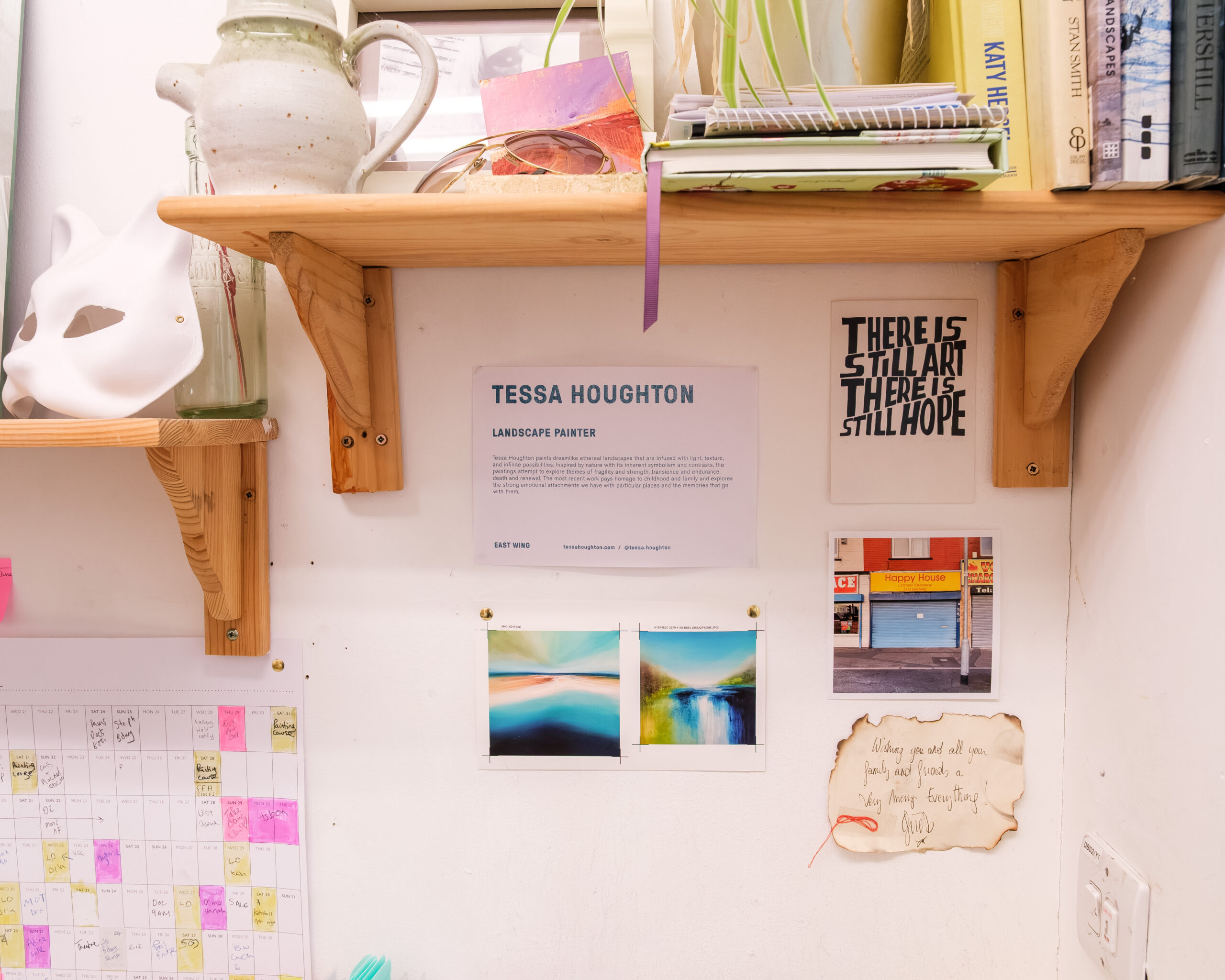
She first saw studios at East Street Arts at Open Studios in 2015. ‘I just loved it here. I remember thinking, this is a dream.’ A studio came up two years later, and she’s been at Patrick Studios ever since.
Tessa runs six-week life drawing courses every spring and autumn. She describes the course:
‘It’s a bit like yoga, you do it at the level that you’re at. Every time you do it, you practise, and you get better, so you can just keep coming back. It doesn’t feel repetitive.’
That approach has taken her teaching beyond the studio, too. More recently, she has developed a series of life drawing sessions with Yorkshire Sculpture Park, each responding directly to the work and setting of a different exhibition. For a session inspired by Laura Ellen Bacon’s Into Being in the Chapel, participants drew a model entwined within the woven willow installation, using willow sticks with charcoal attached to their ends. ‘It made me think completely differently about drawing and the possibilities of collaboration between the artist, the model and the space.’
Tessa’s six-week autumn course, Introduction to Life Drawing, begins on 21 October and runs through to 25 November. She has work in Salon at Patrick Studios, part of Open Studios, followed by the Affordable Art Fair Battersea in October, where she will be exhibiting with Linda Blackstone Gallery.
For now, though, the discipline that keeps all of it moving is the one she describes most simply.
“I know this is what I want to do. There are definitely times when it feels uncertain, but I’ve learned to trust the rhythm of the work. The more I work, the more the inspiration comes, and one thing leads to another. Somehow, the next thing always comes along.”
Find Tessa:
Website: tessahoughton.com | Instagram: @tessa.houghton
Want to join Tessa for life drawing?