Shih Ting Sun is an artist using different textures and materials to create installation works and unique publications.
Born in Taipei, Shih Ting Sun explores the connection between materials, images and emotion while making sense of her personal experiences. Recently, she has been developing installation work that brings together fabric, printmaking and hand embroidery to examine identity, replication and movement.
How would you describe your practice, and what have you been working on in the Riso room?
Most of my work begins with the everyday. The shopping lists my mother writes for me might look like simple reminders, but to me, they read like small letters of care. I translate the handwriting and marks from these lists into embroidery, turning something fleeting into a gesture that can be held and kept. It feels like a way of continuing a conversation with her.
During my residency, I came across a book about wounds in a charity shop in Leeds and felt an unexpected connection to my own work. The handwritten lines and embroidered threads echoed the traces of wounds: small but real, fragile yet deeply present.
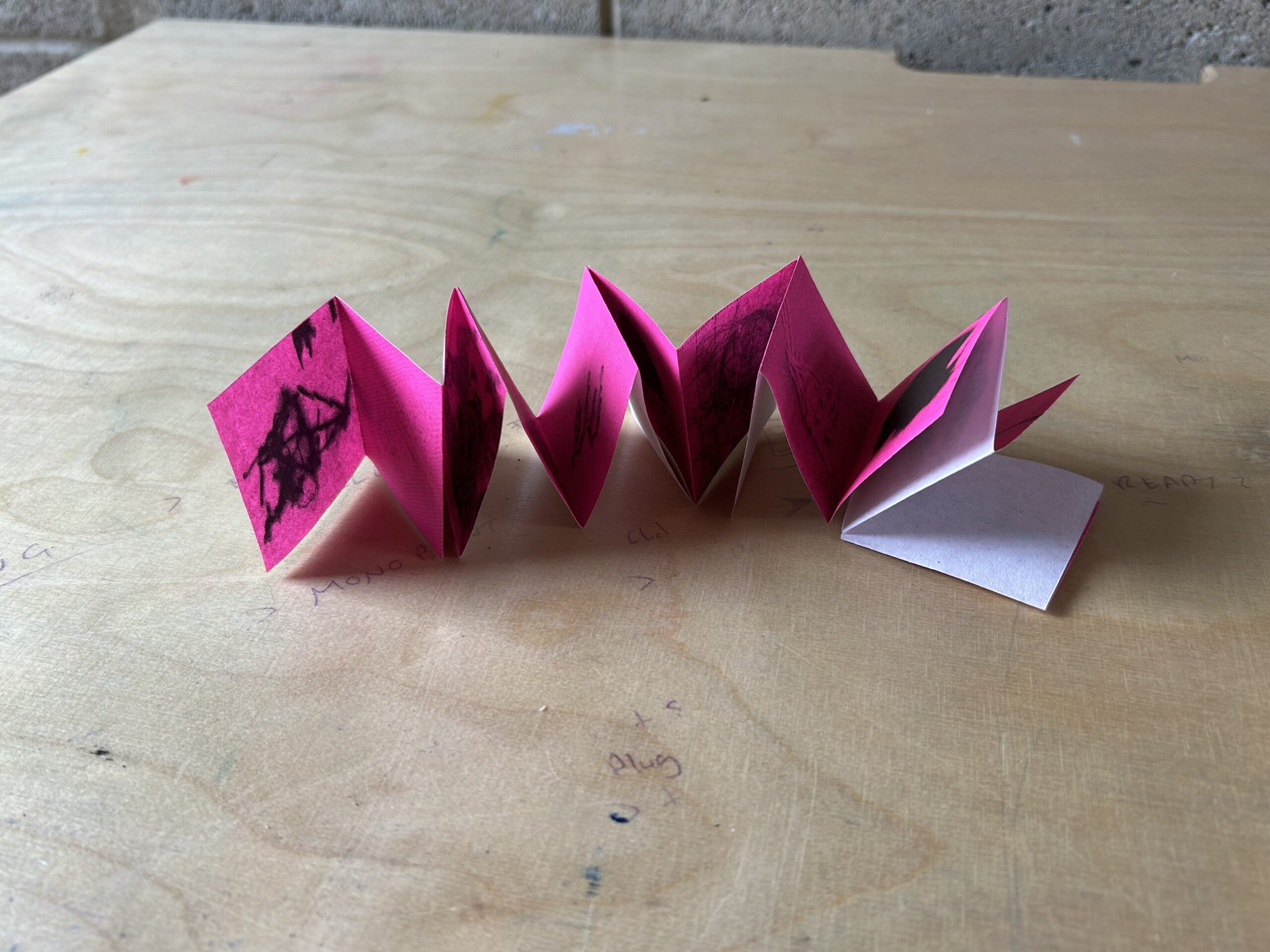
I scanned and enlarged the embroidery, then collaged the details with images from the book to create a small zine. It became more than just a publication – it felt like a space that gathers touch, memory and emotion, inviting others to share a sense of intimacy as they turn the pages.
I was also thinking about how images might move beyond ‘seeing’ to evoke a feeling of touch. For me, an image isn’t only a flat surface but something that can hold texture and a sense of bodily presence. When I scanned, enlarged and converted the embroidery back into images, it still carried those traces. The shadows of the stitches and the fibres of the threads, visible only to the eye, still spark an imagined sense of touch.
This shift fascinates me: touch becomes a texture that is remembered and imagined within the image. When placed alongside the book on wounds, the lines began to resemble stitches or scars on skin, both visual and tactile. The zine is not just a grouping of images but a vessel that allows viewers to feel through looking.
Describe Riso printing in three words.
Transparent, freedom, home.
Which part of the creative process in Riso printing inspires you the most?
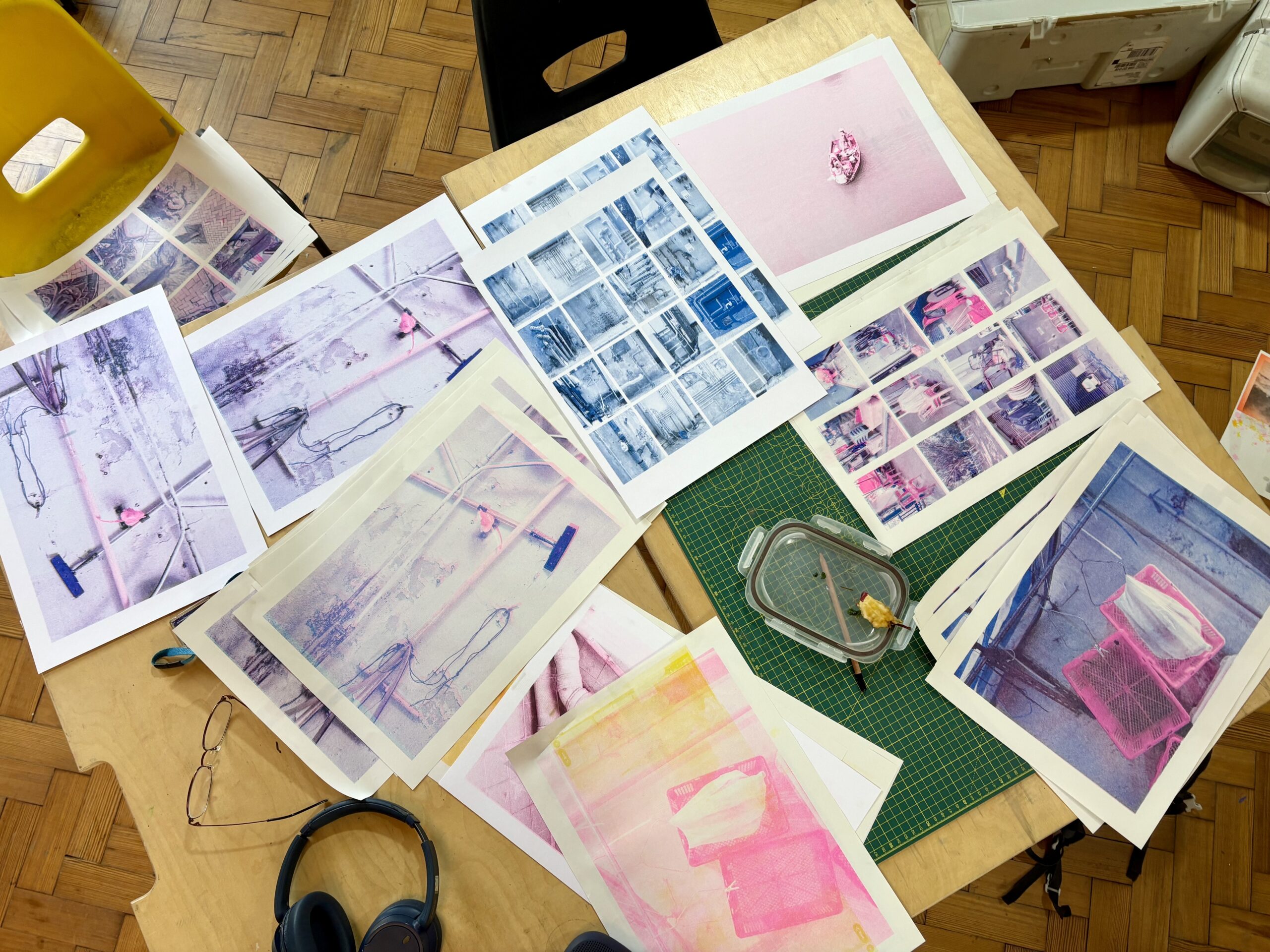
I’m most inspired by the process of searching for and changing colours. In the residency space, each machine held only one colour drum, and the two available machines carried different inks. Every decision, whether to switch a colour or keep printing with what was already loaded, became both practical and creative.
The labour of changing colours, the waiting and the testing all became part of the work. These limitations pushed me to experiment with unexpected combinations and to embrace uncertainty. The machines also ‘remembered’ previous layers, recording the traces of my actions.
This mix of physical work, constraint and chance is what I find most exciting in Riso. It turns printing from a straightforward task into a dialogue between me, the machine and the colours.
If you could only use two colours, what would they be and why?
I would choose complementary colours, or a base colour paired with a fluorescent colour like blue and fluorescent orange. When printing, I adjust the image’s pixels. Where the complementary colours overlap, they create darker areas; where they don’t, each colour stands out more clearly. This contrast and layering help me observe how colours interact and also heighten the sense of texture. The way the colour blocks overlap or separate gives the surface a tactile feel, allowing viewers to sense depth and materiality through sight alone.
Has your time in the Riso room changed how you work or think?
Because the studio and accommodation were in the same building, and there were no time limits, I could plan my days more freely: exploring during the day and working late into the night. This rhythm is familiar to my usual practice, but the residency gave me a more concentrated environment where I could pay closer attention to experimentation and detail. Without commuting or fixed schedules, I had more freedom to make mistakes, refine ideas and even work on several pieces at once. The experience helped my process feel more fluid and intuitive.
What piece of advice would you give someone who wants to start using Riso?
Riso is a medium that really rewards play and curiosity. You don’t need a fixed plan or prior experience. What matters most is a willingness to experiment. It’s ideal for trying out new approaches: layering colours, testing textures or trying unexpected combinations. Mistakes often lead to new ideas, so focusing on the process rather than perfection can open up possibilities. If you enjoy exploring and have an imaginative approach, Riso is a brilliant medium to work with.
Find Shih Ting Sun:
Instagram: @ssshihting