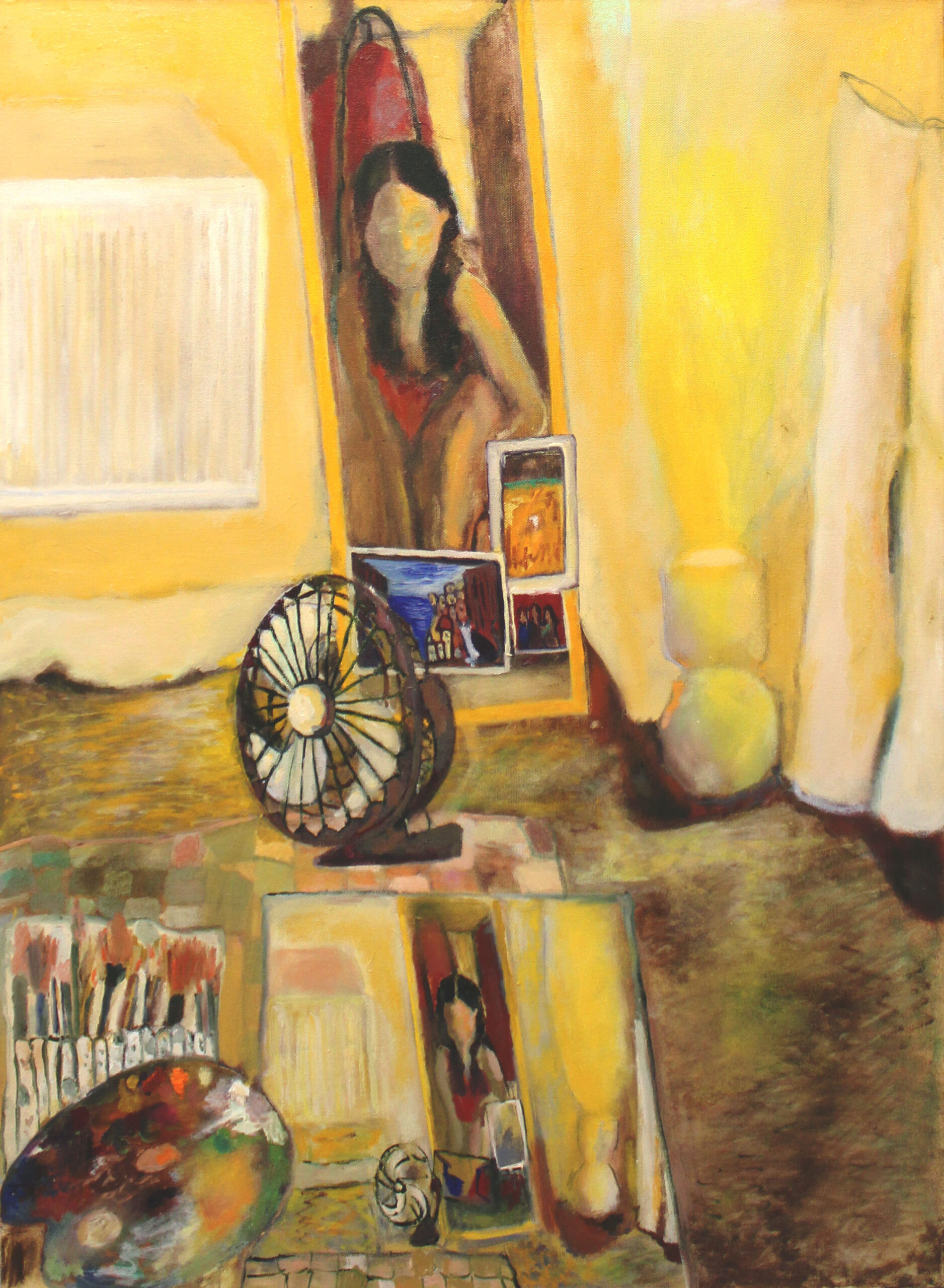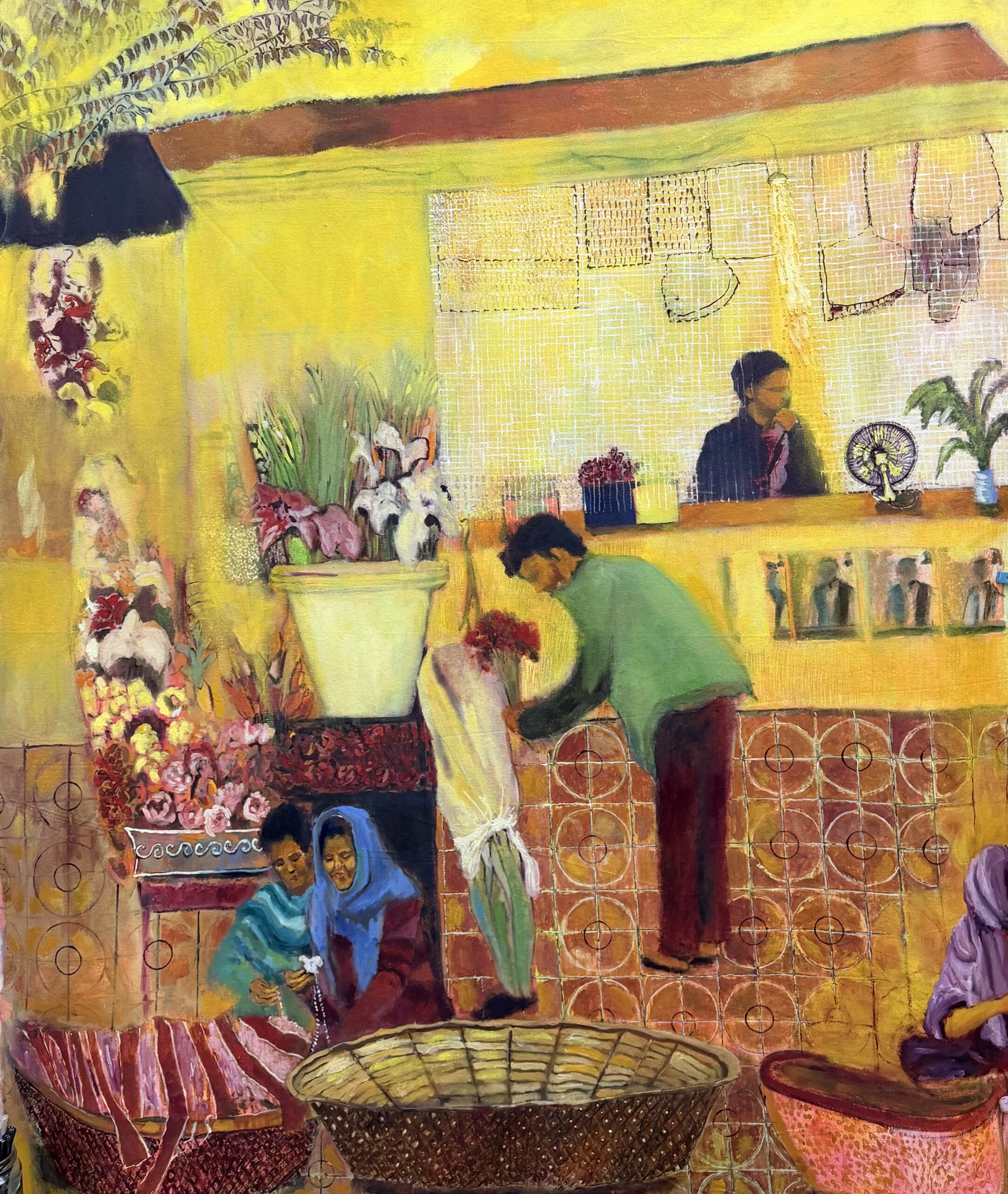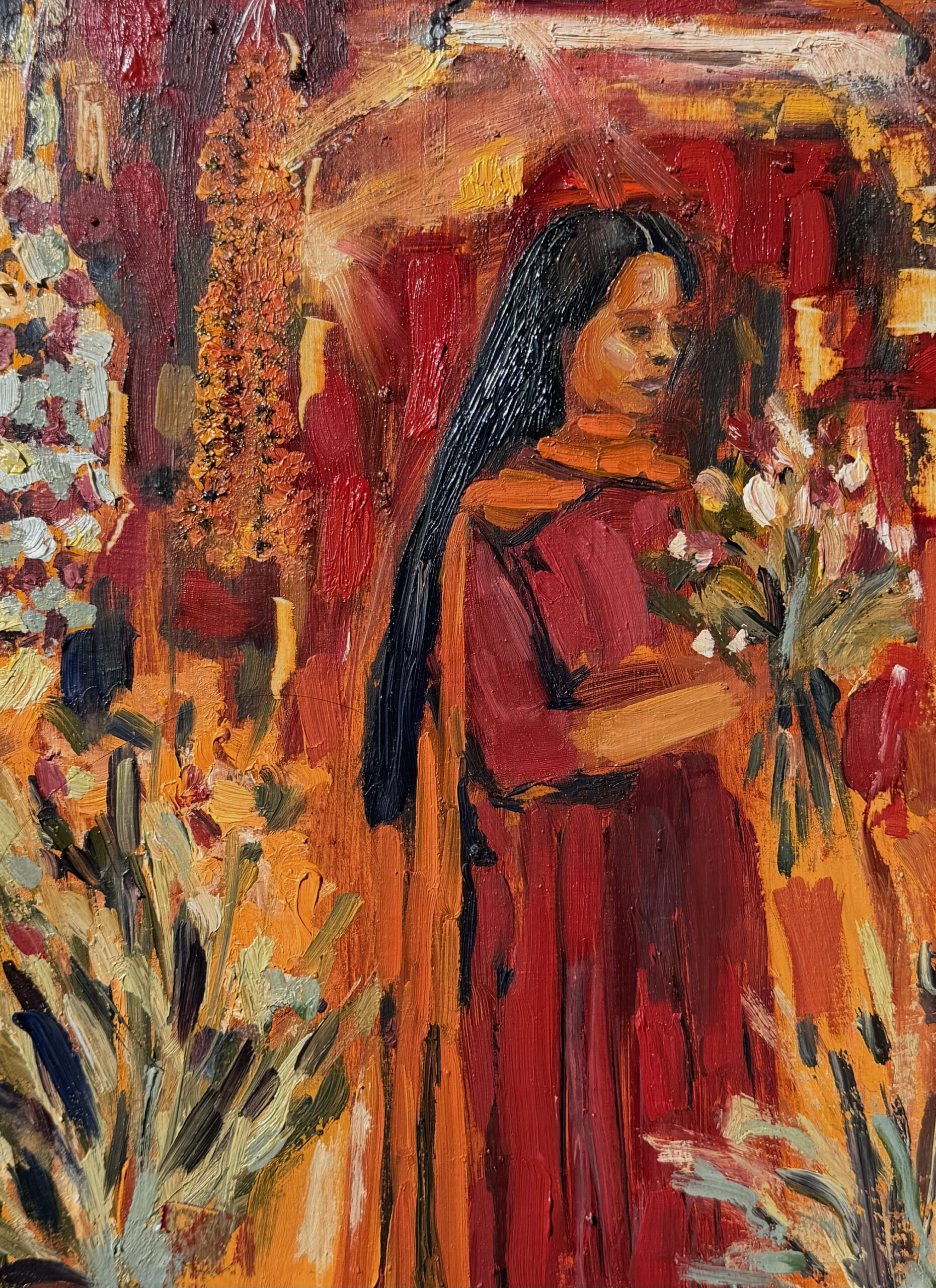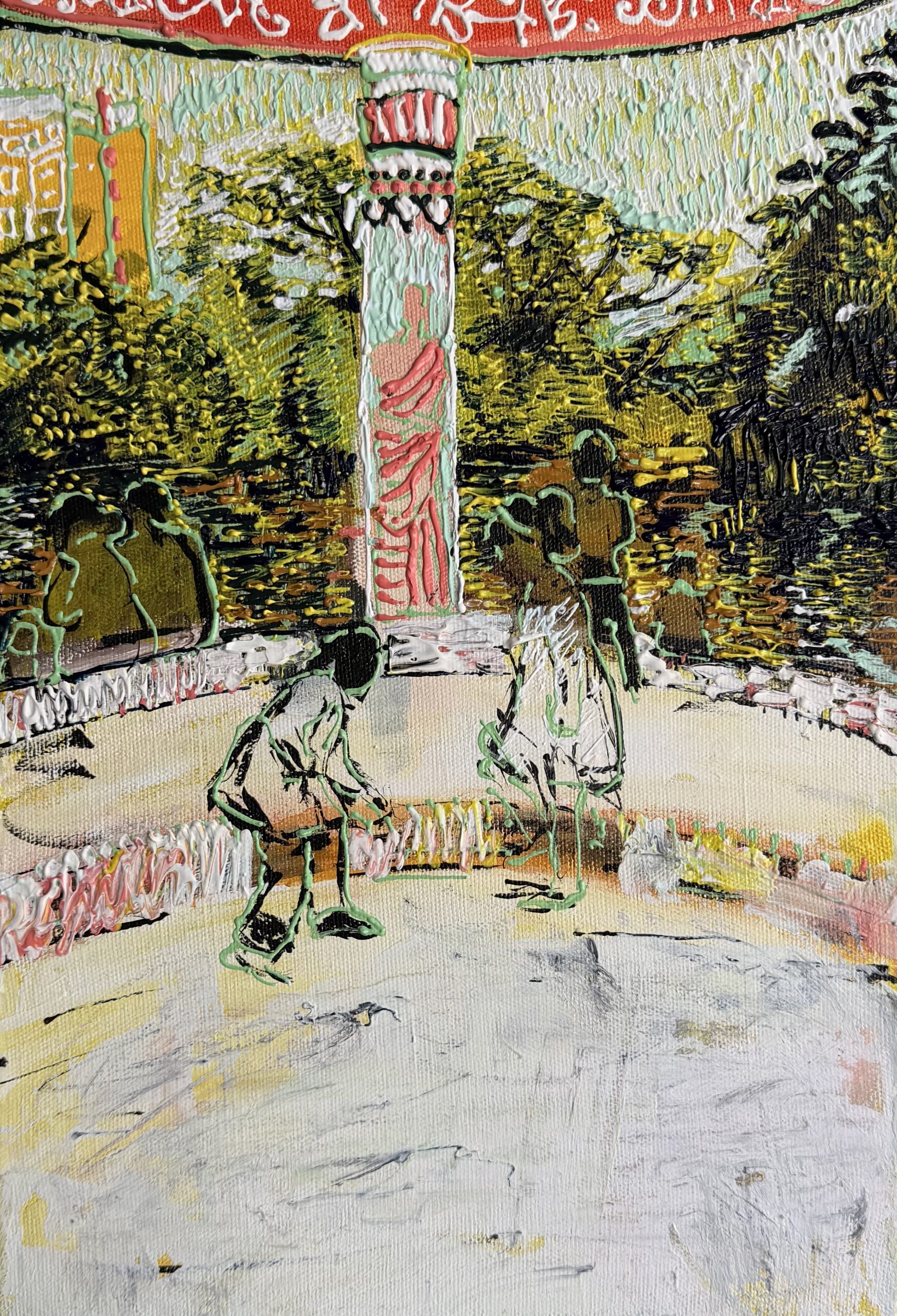
We spoke to Tafsia Dana, an emerging oil painter whose work explores memory, domestic space and place.
Following on from our Ones to Watch residencies, we’ve been catching up with the artists about their practice. Next, we’re talking to Tafsia Dana, an artist who works with painting and the domestic.
Late last year, Tafsia joined us at Convention House for a residency, spending time developing a body of painting rooted in memory, place and sensory experience. As an emerging artist working primarily in oil painting, her practice explores how memories shift over time, drawing on personal histories of Bangladesh and the textures of everyday life.
‘I think my practice is very focused on misremembering memory. The more we look back at memories, the more we misinterpret them. I try to work with that, using those distortions to build compositions that feel true, even if they are not exact.’
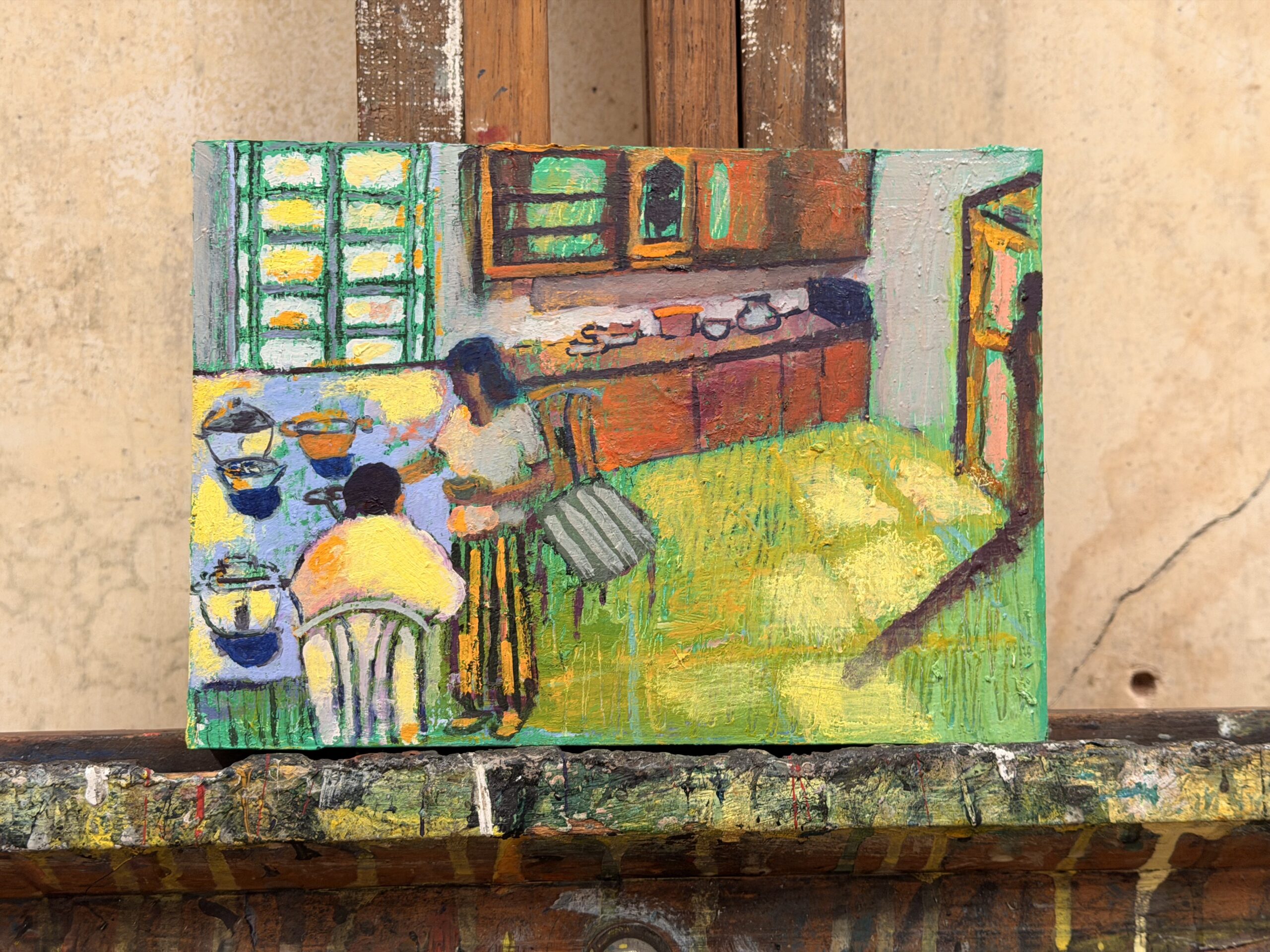
Colour plays a central role in this process. Drawing on memories of Bangladeshi homes, her paintings are filled with warmth and intensity, with deep reds, bright yellows, and layered surfaces that echo the sensory richness of domestic space.
‘I have been thinking about spices like red chilli and turmeric. They have such strong colours, and they stay with you. I try to bring that warmth into the paintings, so they feel homely, like something you recognise, even if you cannot place it exactly.’
Alongside this, her work reflects on the rapid urban development of Dhaka, and the quiet disappearance of architectural details that once defined everyday spaces.
‘There are small motifs, window grilles, patterns, details, that are slowly disappearing. I try to hold on to those in my work. It is a way of preserving them, even if they do not exist in the same way anymore.’
Painting itself emerged as a relatively recent but defining part of her practice. After initially focusing on academic study, she turned to painting as a way of exploring something more open-ended and continual.
‘Once I started, I realised it was something I could spend my whole life learning. Oil painting is such an old medium, but there is always more to understand. That is what keeps me engaged.’
The residency offered space to develop this process further. Working in layers and allowing time for each to dry, the paintings evolved slowly and often shifted significantly from their initial sketches.
‘I usually start with drawings, but once I move to canvas, everything changes. The final image is something I do not predict. I stop when it feels resolved.’
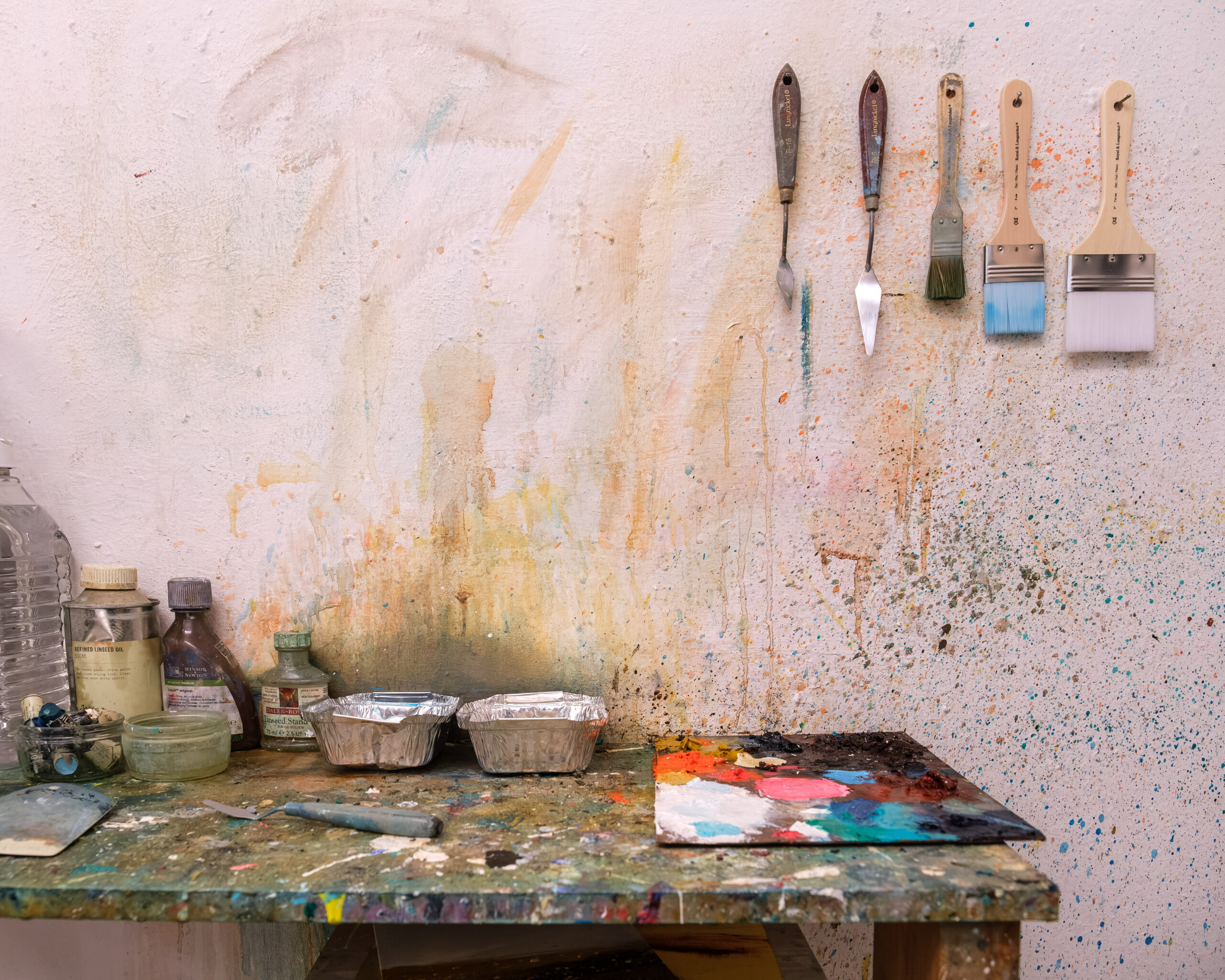
Studio space played an important role in shaping this development. Everyday observations at Convention House, such as light, objects and small details, fed directly into the work.
‘When you are in a studio, you just focus. Even small things, like a chair or the way light falls in the room, can become part of the painting.’
For Tafsia, residencies are less about producing finished work and more about creating the conditions to think, observe and develop ideas.
‘I do not go in with a set outcome. I try to absorb as much as I can, like a sponge, and then take those ideas forward later.’
This approach has been shaped by working across different locations, from Leeds to international residencies, each bringing a shift in pace and perspective. In Leeds, the studio environment offered a new rhythm, one that encouraged focus without pressure.
‘I did not feel like I had to produce anything specific. It felt very open and independent. I think that is why I was able to make work I actually liked.’
That sense of freedom also allowed for subtle but important shifts in her practice. Figures became more defined, and attention to detail increased, particularly in the recurring motifs that connect back to home.
‘Details like patterns on rugs or windows are important. They are small things, but they carry memory. Making them more visible feels like bringing them closer.’
Looking ahead, Tafsia plans to return to Bangladesh, where she is applying for exhibitions and continuing to develop new work. She is also seeking further residency opportunities, particularly in Europe.
‘I want to spend more time observing what is around me at home. There are things I probably overlooked before, and I want to see how they might shape the work.’
‘I really enjoyed it. I was meant to stay for one month, but it became three. Having that time made a big difference. It gave me space to think and develop the work properly.’
Tafsia’s latest work can be seen in Fading Warmth, an upcoming exhibition at Patrick Studios, LS9 7EH. The launch is on Thursday 16 July from 6pm, with the exhibition running until 30 July.
Find out more about Fading Warmth
Find Tafsia: @art_danatafsia
Ones to Watch supports early career artists through studio residencies and development opportunities, with artists chosen from the annual Sunnybank Mills Ones to Watch exhibition. Residencies like this are made possible thanks to the support of funders Leeds City Council, UKSPF and Arts Council England.