Mexican born artist Katya Mora reflects on their time at Convention House during their recent Risograph Residency
Mexican-born artist Katya Mora, with a BA in Fine Arts from the Polytechnic University of Valencia (Spain) and the Bauhaus University Weimar. At present, Katya develops her visual artwork as part of Fusion-Arts Studios in Oxford, from where she remotely transmits “Campo de Fuerzas” (Forces Field) a weekly radio program for the independent Mexico City station Radio Nopal.
How would you describe your practice, and what have you been working on in the Riso room?
My work explores the expression of natural and human forces: volcanoes, instincts and chaos, through painting, photography, installation and video. I am interested in tracing through matter that which can not be seen but can be sensed. I work with first-person narratives and focus on ecological transformation, seeking horizontal dialogues with nature that challenge extractive frameworks. My approach integrates ancestral knowledge and self-decolonisation perspectives to redefine the idea of landscape. Over time, my work has become increasingly research-based and process-led, incorporating personal archives and fieldwork.
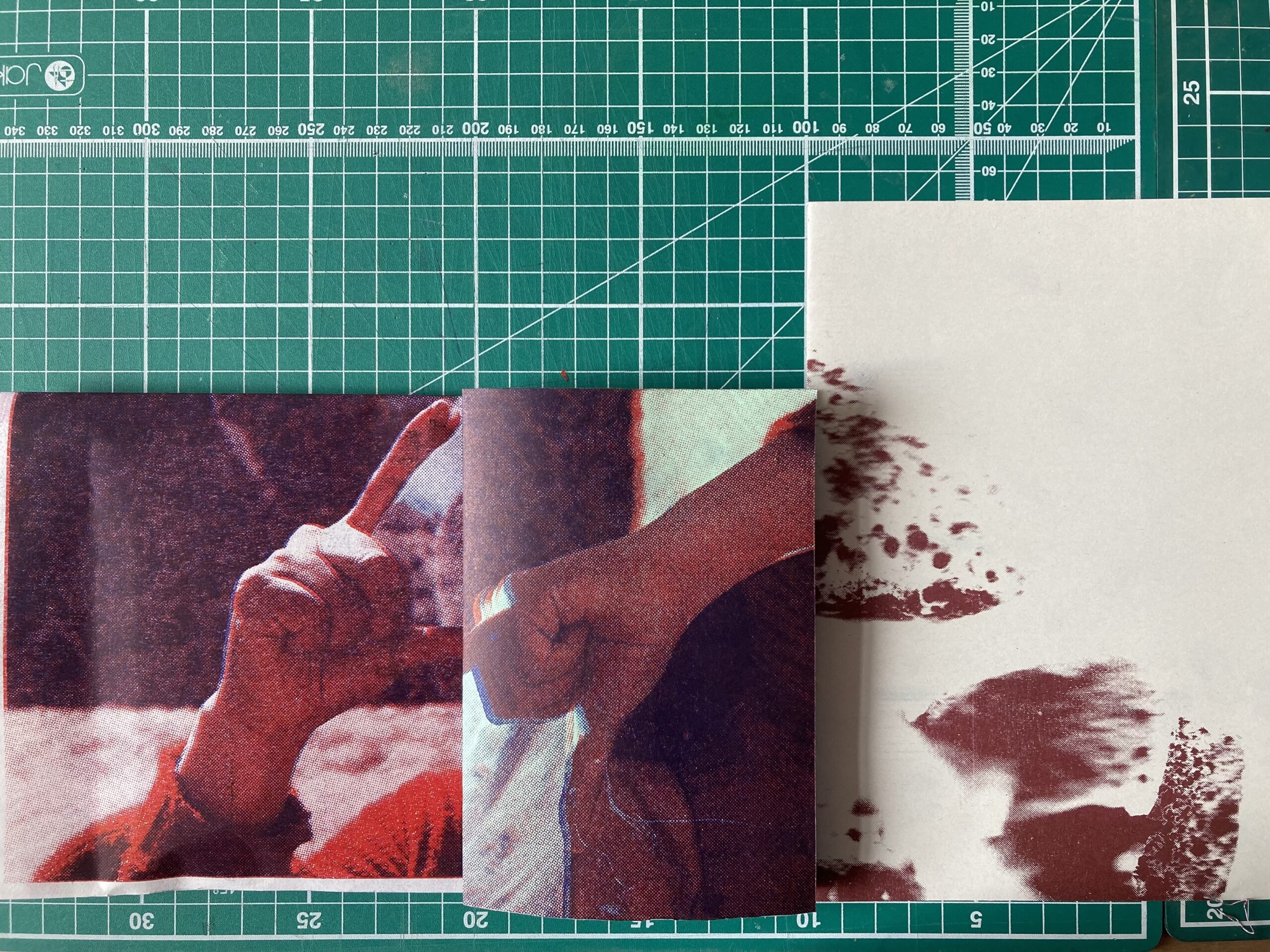
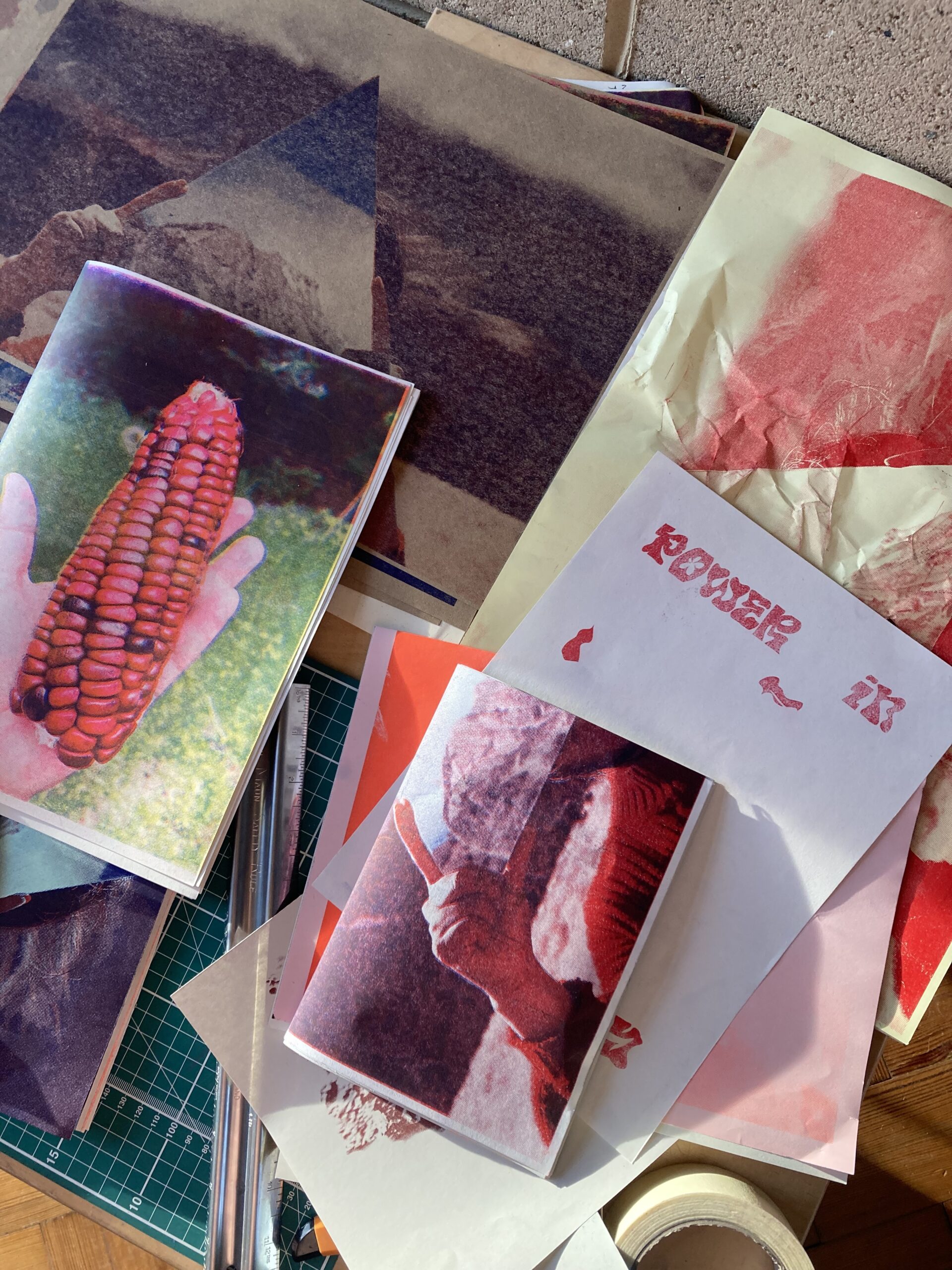
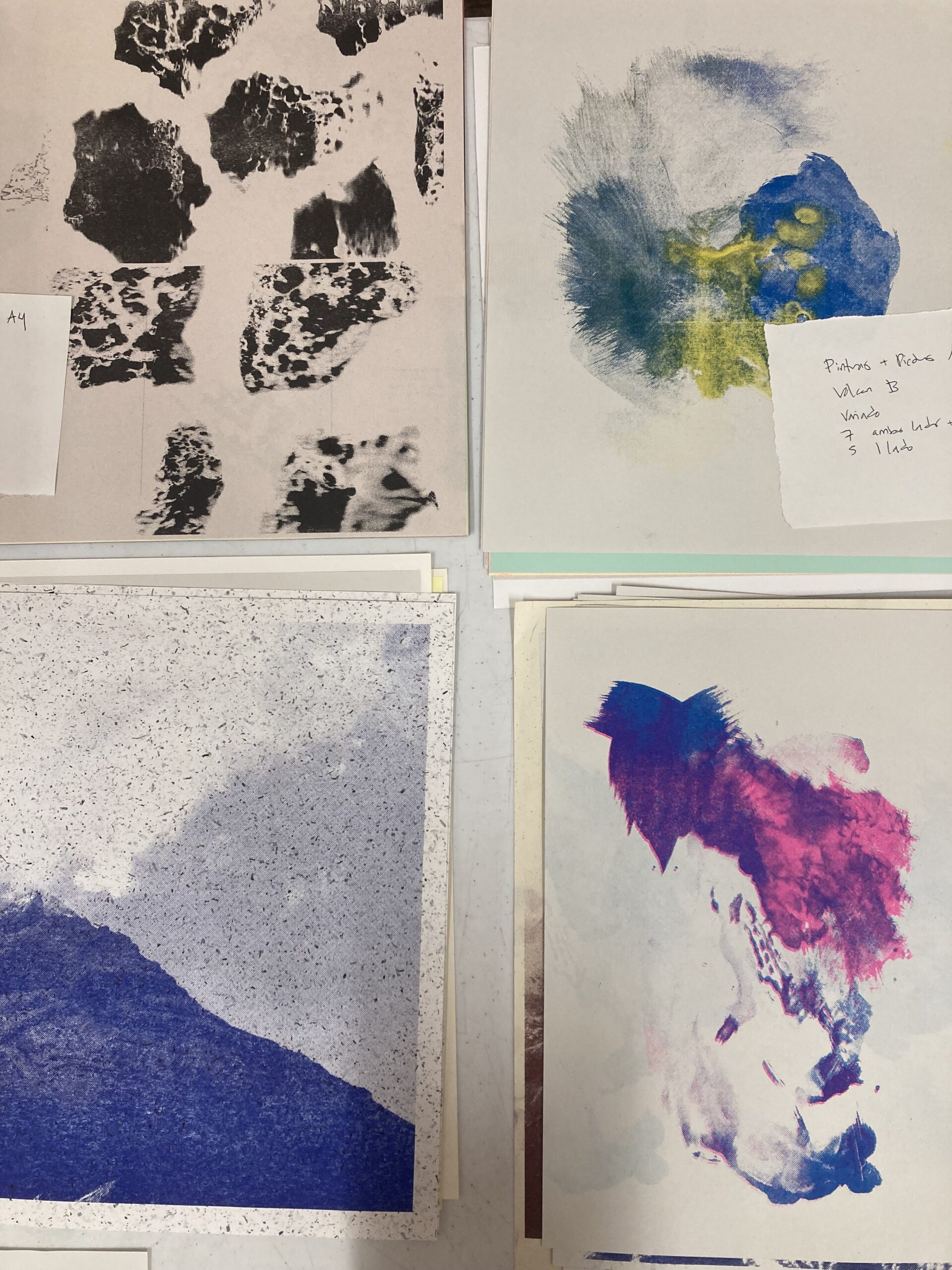
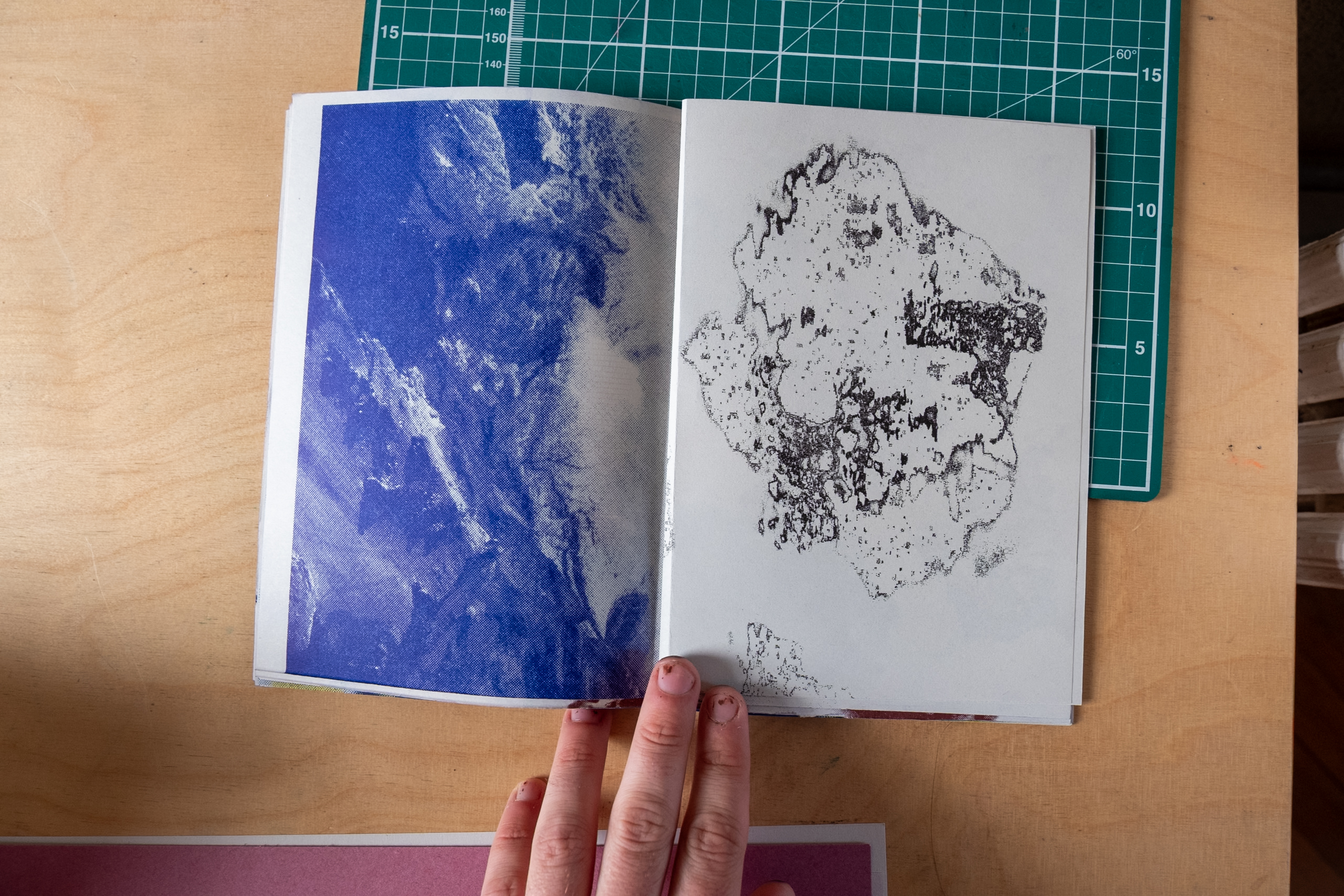
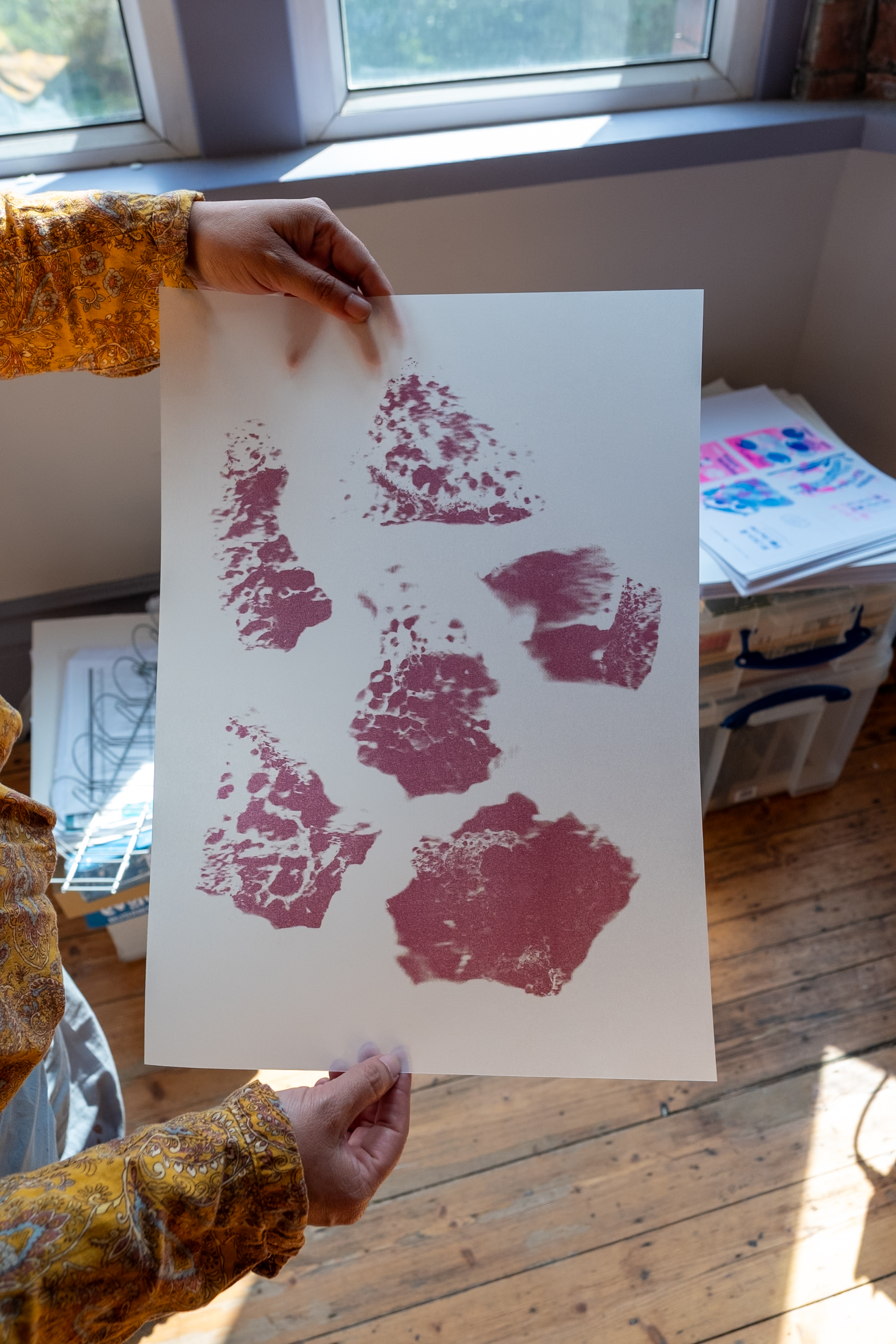
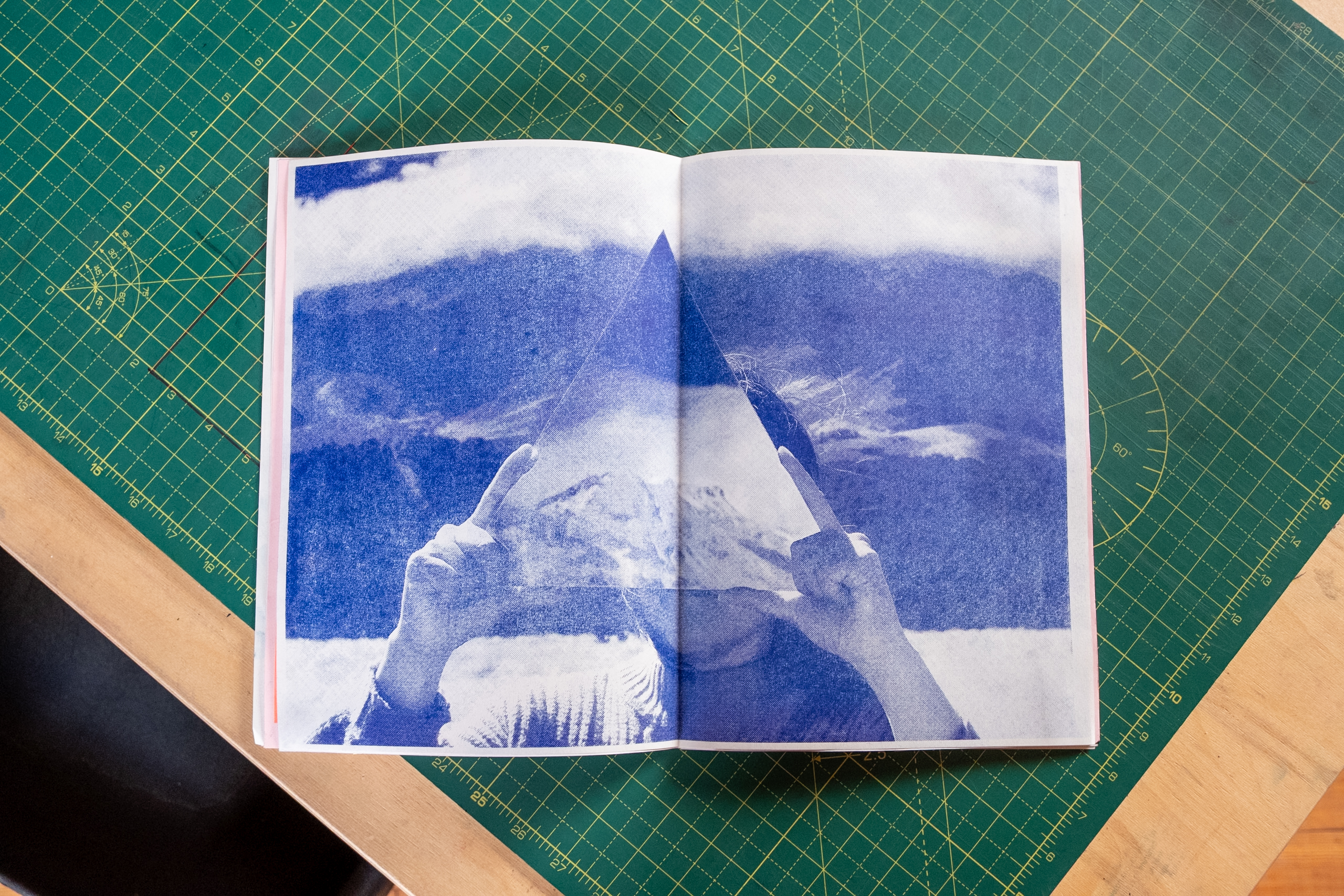
In the Riso room, I have been working with images from my recent project: Forces that are not Landscape, a two-channel video installation combining sound, painting and photography. A project in which the main focus is the dialogue formed with an active volcano, the Popocatepetl, located in the centre of Mexico. Through using risograph print, I focused on bringing the experience of walking and feeling the force of the volcano to paper by finding different ways to manifest it: faintly, explosively, silently.
Describe Riso Printing in three words
Bygone and futuristic
Which part of the creative process in Riso printing inspires you the most?
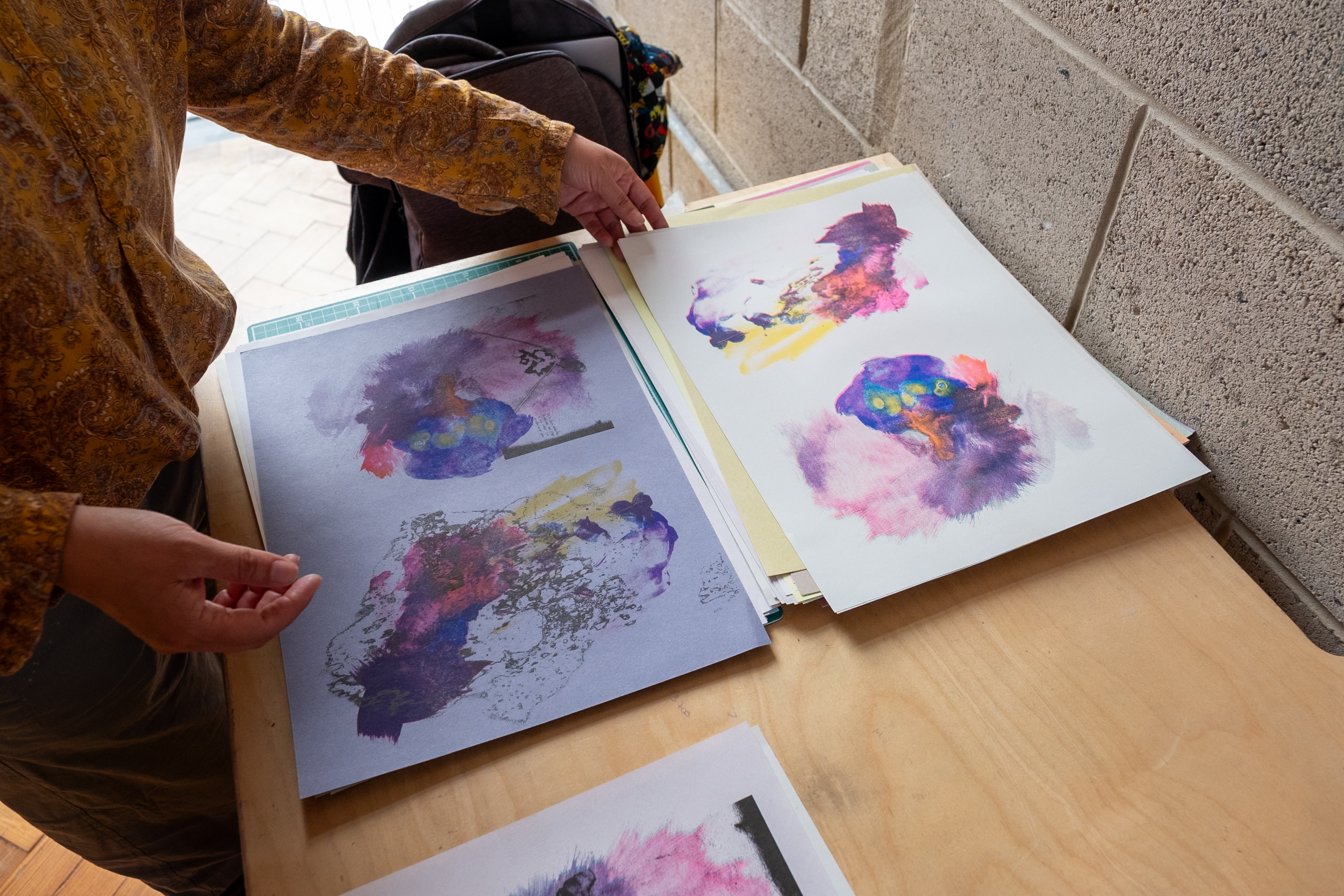
When, after the first printed layer, I started adding more layers on top, I discovered how colours, textures, and meanings blend together—and how new things appear that I couldn’t have imagined before. There’s something very manual about the Riso process that powerfully triggers the imagination.
If you could only use two colours, what would they be and why?
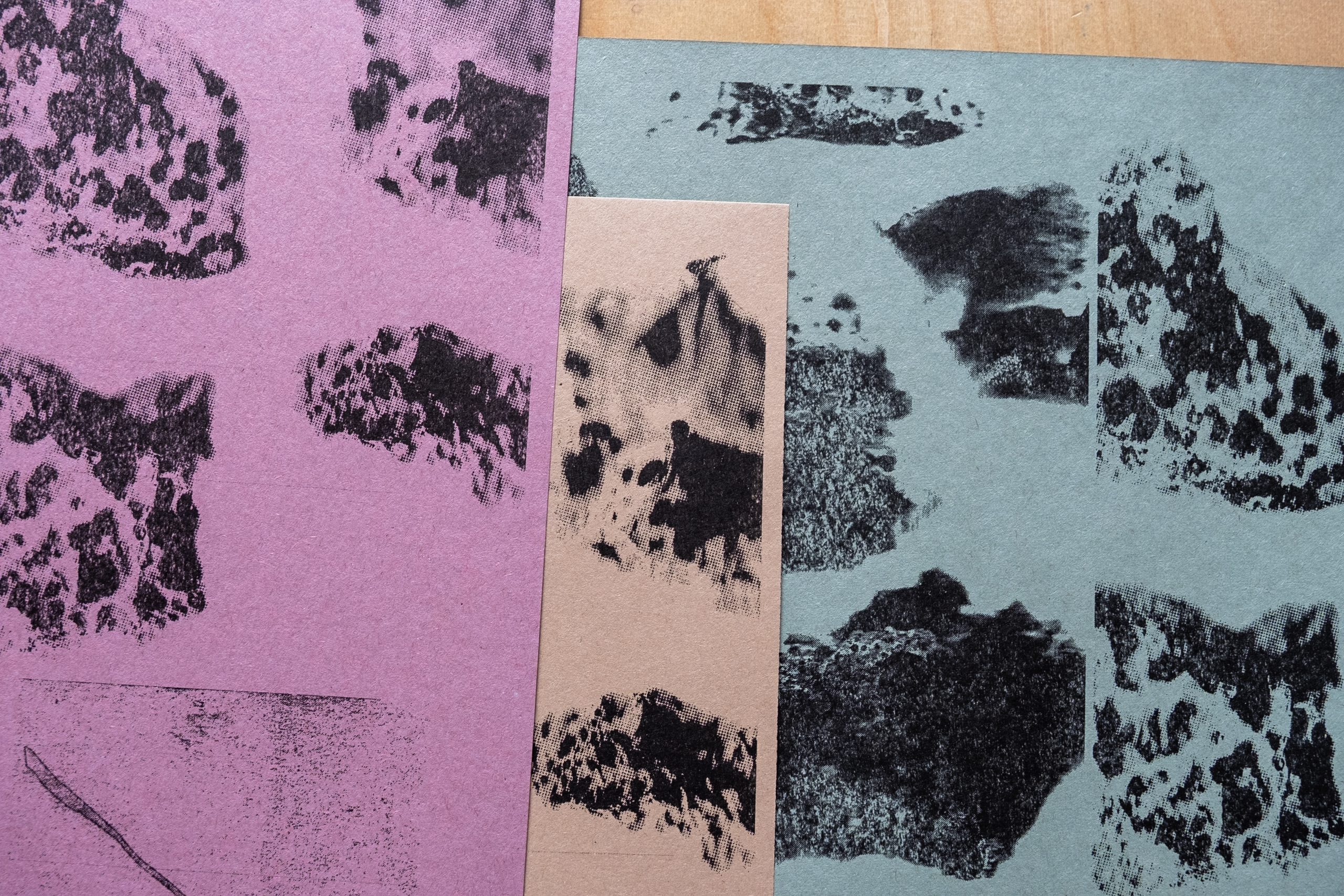
Fluo Pink, because I realised how multifaceted it could be depending on the colour of paper I used. It could be mysterious, almost invisible, or totally explosive. And Burgundy, because in my perception, it reveals details in a very sharp way—and also because it gives a bygone feeling that, when mixed with other colours, can be quite enigmatic.
Has your time in the risograph room changed how you work or think?
Yes, totally. After a few days, something new appeared in my perception of how I envisage my work. During my stay, I produced work with a great variety of colours because of the papers I used and how I mixed prints between them. Then, I started to consider the whole production as an entity, as a piece of work itself. Before, I thought that Riso was more like another instance of work already done, but suddenly I realised that it is, in fact, a new way of resignifying and creating new work. I can now imagine myself creating an installation with Riso prints.
What piece of advice would you give to someone who wants to start using Riso?
Just try, make mistakes, and observe them. Take risks with colours, papers and images. All that you print is useful; crop results; make it again. Take the time to look at what you have done; take a rest and dream riso.
Find Katya:
Want to see more of Katya’s work?
Find out more about TEST MODE